
AirAsia Captures 17th Consecutive SKYTRAX Crown: 855 Million Passengers and the Economics of Asian Low-Cost Aviation

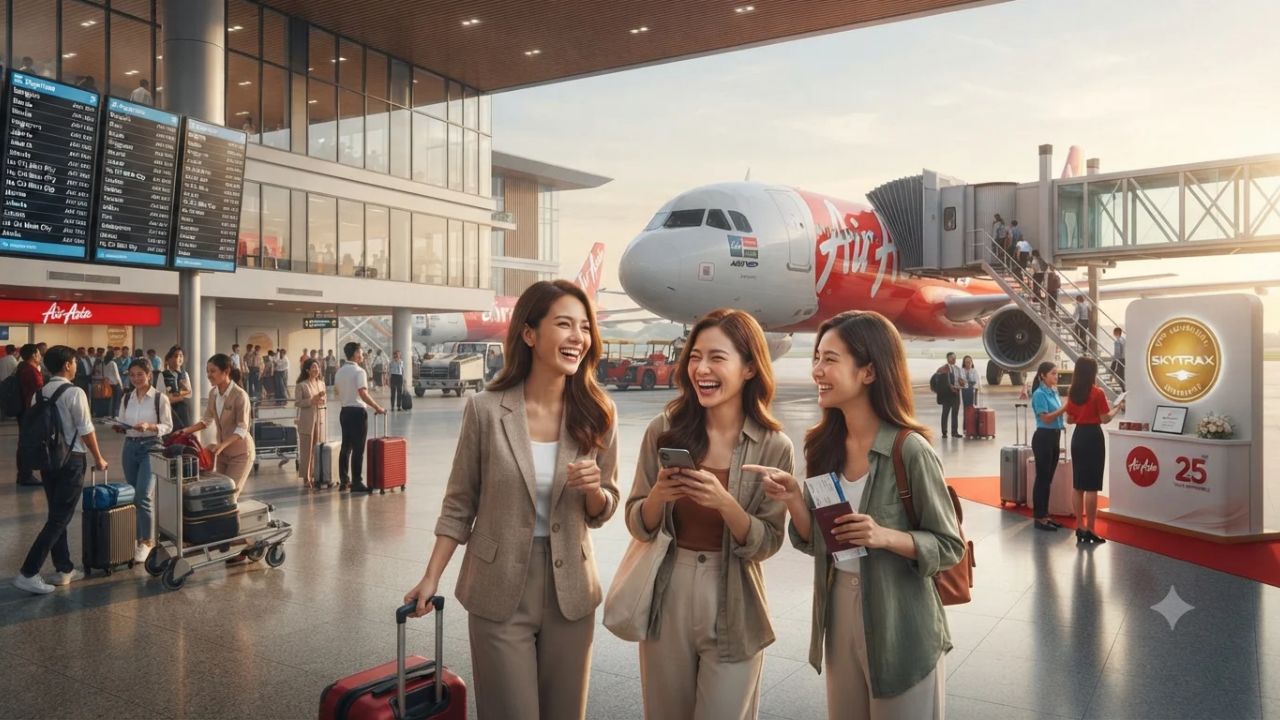
Image generated by AI
Surpassing an aggregate threshold of more than 855 million transported passengers since its inception, AirAsia has captured the title of World's Best Low-Cost Airline for the seventeenth consecutive year at the 2026 SKYTRAX World Airline Awards. Marking a quarter of a century since its commercial founding, the Malaysia-headquartered carrier’s unbroken 17-year streak highlights the enduring viability of ultra-low-cost carrier (LCC) economics across the Asia-Pacific region, despite persistent post-pandemic fare volatility, jet fuel inflation, and intense secondary-carrier competition.
The award represents an important validation of consumer trust within an increasingly contested operating environment. Often characterized as the premier recognition benchmark in global commercial flight, the SKYTRAX World Airline Awards rely entirely on the independent World Airline Survey, which gathers millions of unprompted passenger satisfaction submissions across international markets without charging airline entry fees. For AirAsia, sustaining top-tier global standing across nearly two decades reflects an operational model that has successfully balanced relentless unit-cost containment with brand loyalty, proving that low fares do not require compromising passenger-perceived value.
The Quarter-Century Paradigm: Deconstructing the 855-Million Passenger Scale
AirAsia’s 25-year trajectory mirrors the broader democratization of mobility across Southeast Asia. Founded with just two aging aircraft, the carrier pioneered the short-haul point-to-point budget model in Asia, unlocking affordable air travel for emerging middle-class demographics that had historically depended on arduous bus, rail, and maritime ferry corridors. By establishing decentralized joint-venture operating certificates across Thailand, Indonesia, the Philippines, and Cambodia, the airline bypassed bilateral traffic restrictions, establishing an integrated regional route grid centered around secondary and tertiary metropolitan markets.
The structural foundation of this expansion rests on classic low-cost operational disciplines. AirAsia maintains high aircraft utilization rates, rapid 25-minute tarmac turnarounds, direct-to-consumer digital booking engines, and a unified narrowbody fleet composed predominantly of Airbus A320 and larger A321neo aircraft. In collaboration with regional trade monitoring groups such as the Association of Asia Pacific Airlines (AAPA), the carrier demonstrated that low-cost connectivity acts as a primary catalyst for regional gross domestic product growth, channeling millions of leisure tourists and business travelers into previously bypassed provincial airports.
| Operational Pillar | Program Benchmark | Commercial Strategy | Market & Passenger Outcome |
|---|---|---|---|
| Historical Passenger Volume | Over 855 million flown | High-density seating and point-to-point routing | Democratized regional mobility across 25 operating years |
| Global Award Consistency | 17 consecutive SKYTRAX titles | Unbundled product pricing and digital self-service | Strong consumer retention and repeat-booking loyalty |
| Fleet Asset Management | Uniform Airbus A320/A321 family | Lower fuel burn, standardized flight-crew training | Maintains lowest cost per available seat kilometer (CASK) |
| Ancillary Revenue Model | Unbundled baggage, meals, seating | Digital ecosystem monetization via proprietary apps | Shields base fares against escalating airport service fees |
Fleet Efficiency and Ancillary Monetization Mechanics
Sustaining cost leadership in an era of elevated jet fuel prices requires continuous technical adaptation. AirAsia’s phased induction of fuel-efficient Airbus A321neo jets provides higher seat capacity while reducing fuel burn per seat by double digits compared to previous-generation aircraft. This technical efficiency gives the airline the range flexibility to operate thinner international routes connecting secondary ASEAN cities with key destinations across China, India, Japan, and Australia without relying on expensive widebody aircraft.
Simultaneously, the carrier has refined the art of unbundled ancillary monetization. Rather than burying operational costs within opaque ticket bundles, AirAsia provides rock-bottom baseline transportation while charging independently for checked baggage, seat selection, hot inflight meals, and priority boarding. By converting its digital platforms into full-scale travel booking ecosystems, the company extracts non-aeronautical margins that offset inflationary increases in airport passenger charges and sovereign air traffic navigation tariffs.
Expert Analysis: Ultra-Low-Cost Viability Amid Fuel Volatility and Airport Tariffs
For travelers booking this route, the direct consequence is that baseline base fares remain remarkably low, but total itinerary costs are heavily dictated by dynamic ancillary fee algorithms that penalize last-minute baggage and seat selections. Independent travelers who understand the unbundled model can traverse vast international distances across Southeast Asia at prices unmatched in North America or Western Europe, provided they adhere strictly to carry-on weight limits and manage check-in procedures via mobile applications.
The pricing pressure this creates means legacy full-service competitors across Southeast Asia have been forced to unbundle their own economy tariffs, as documented by the International Air Transport Association (IATA). Competing carriers operating through primary international hubs cannot match AirAsia’s baseline seat costs without stripping back legacy perks or operating secondary budget subsidiaries. By centering operations at cost-optimized terminals—such as Terminal 2 (klia2) at Kuala Lumpur International Airport and Don Mueang International Airport in Bangkok—AirAsia avoids the punitive landing fees and slot congestion that inflate airfares at high-cost mega-hubs. This infrastructure alignment ensures that the low-cost carrier model remains the definitive engine of Asia-Pacific tourism growth into its next quarter-century.
Key Takeaways
- AirAsia was named the World's Best Low-Cost Airline for the 17th consecutive year at the 2026 SKYTRAX World Airline Awards.
- The achievement coincides with the airline's 25th anniversary of commercial operations, during which it has flown more than 855 million guests.
- Rankings are established through the independent Skytrax World Airline Survey, reflecting global passenger feedback gathered without airline entry fees.
- AirAsia's sustained cost advantage is driven by high-density Airbus narrowbody operations, fast turnaround times, and extensive unbundled ancillary services.
- Regional operational hubs in Malaysia, Thailand, Indonesia, the Philippines, and Cambodia provide an integrated point-to-point network linking primary and secondary cities.
FAQ: AirAsia SKYTRAX Recognition and Low-Cost Operations 2026
How many times has AirAsia won the SKYTRAX World's Best Low-Cost Airline award?
AirAsia has won the title for 17 consecutive years, maintaining its position as the world's most recognized budget carrier at the SKYTRAX World Airline Awards.
How many passengers has AirAsia flown in its 25-year history?
Since its commercial relaunch 25 years ago, AirAsia has carried more than 855 million passengers across its extensive Asian and international route network.
How are the SKYTRAX World Airline Awards decided?
The awards are determined through the independent, global World Airline Survey conducted by Skytrax, collecting millions of traveler evaluations without requiring entry fees or sponsorships from participating airlines.
What is AirAsia’s primary fleet strategy?
AirAsia operates a standardized, single-family fleet consisting primarily of Airbus A320 and fuel-efficient A321neo narrowbody aircraft, which maximizes scheduling flexibility and minimizes maintenance overhead.
By turning point-to-point operational efficiency into a 17-year global award streak, AirAsia demonstrates that the ultimate metric of aviation resilience lies in making international skies accessible to hundreds of millions of everyday travelers.
Disclaimer
This article is for informational and educational purposes only. It does not constitute legal, financial, or professional advice. While we strive to provide accurate and up-to-date information, travel policies, regulations, and conditions change rapidly. Always verify information with official sources before making travel decisions. Nomad Lawyer makes no representations about the accuracy, reliability, completeness, or suitability of the information provided. Readers should consult qualified professionals for advice specific to their circumstances. The views expressed in this article are those of the author and do not necessarily reflect the views of Nomad Lawyer.
Raushan Kumar
Founder & Lead Developer
Full-stack developer with 11+ years of experience and a passionate traveller. Raushan built Nomad Lawyer from the ground up with a vision to create the best travel and law experience on the web.
Learn more about our team →