
AirAsia Orders 150 Airbus A220 Jets in Historic Deal, Transforms Southeast Asia Aviation
Malaysia's AirAsia places record 150 Airbus A220 order at Mirabel facility, signaling major fleet modernization and regional expansion strategy for Southeast Asia's largest low-cost carrier.

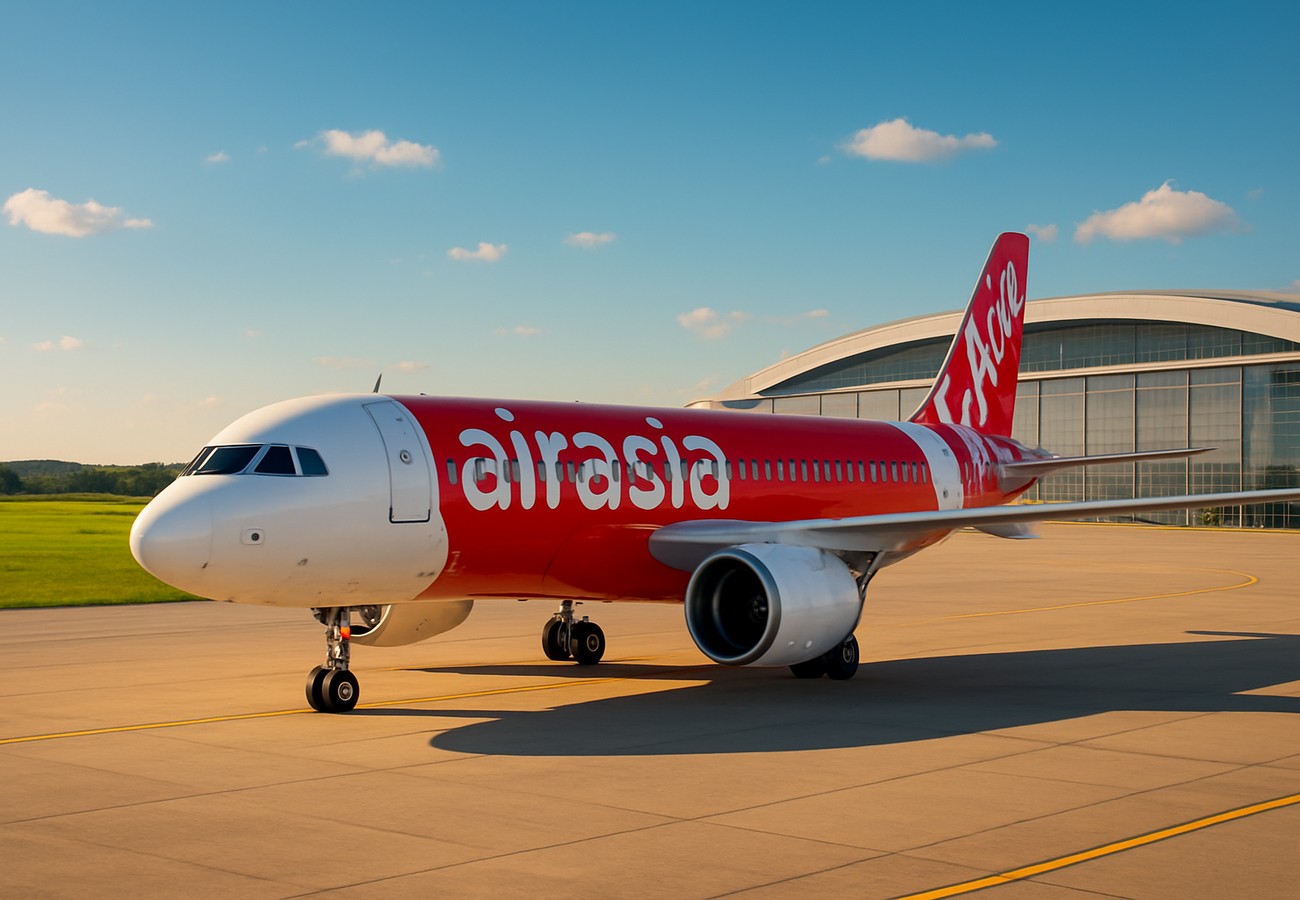
Image generated by AI
AirAsia Announces Historic 150 Airbus A220 Order at Mirabel: Largest A220 Deal Transforms Southeast Asia's Aviation Landscape
Malaysia's Low-Cost Giant Cements Regional Dominance with Record Fleet Modernization Deal
In a watershed moment for Southeast Asian aviation, Malaysia-based AirAsia has officially announced a historic order for up to 150 Airbus A220 aircraft, marking one of the largest single orders in the narrow-body jet's operational history. The landmark deal, unveiled at Airbus's Mirabel assembly facility in Quebec, Canada on May 6, 2026, represents a seismic shift in the region's aviation strategy and positions the low-cost carrier for unprecedented regional expansion.
This transformative agreement signals AirAsia's bold commitment to modernizing its fleet with cutting-edge, fuel-efficient aircraft while simultaneously strengthening its stranglehold on Southeast Asia's rapidly growing budget aviation market.
What is the Airbus A220? The Aircraft Reshaping Short-Haul Aviation
The Airbus A220, originally developed by Canada's Bombardier as the CSeries before its acquisition by Airbus in 2018, has emerged as one of the aviation industry's most game-changing aircraft. This modern, twin-engine narrow-body jet is engineered specifically for short-to-medium-range routes, with passenger capacity ranging from 100 to 160 seats depending on configuration.
The A220's revolutionary fuel efficiency delivers substantial cost savings for operators—a critical advantage in the fiercely competitive low-cost carrier sector. Its advanced aerodynamics, state-of-the-art engines, and optimized maintenance protocols make it a favorite among airlines seeking to maximize profitability on regional networks.
For AirAsia, the A220 represents a perfect intersection of economics and operational capability.
AirAsia's Strategic Fleet Transformation: From A320 Dominance to A220 Diversification
AirAsia's current fleet has been anchored by Airbus's ubiquitous A320-family aircraft, celebrated for their flexibility and proven efficiency on short-haul routes throughout Asia-Pacific. However, the introduction of 150 A220 aircraft fundamentally reshapes the airline's operational strategy.
The A220's smaller footprint and superior unit economics make it ideally suited for:
- Thinner markets and emerging routes where demand is unpredictable
- Regional connectivity across ASEAN nations with high frequency but lower passenger volumes
- Secondary city pairs previously uneconomical with larger A320 variants
- Enhanced revenue optimization through better fleet matching to demand fluctuations
The Strategic Calculus Behind the Deal
This order arrives at a pivotal moment in AirAsia's evolution. The airline faces intensifying competition from full-service carriers upgrading their regional networks, while simultaneously grappling with post-pandemic demand volatility. The A220 provides the flexibility to chase growth while maintaining the razor-thin margins that define low-cost carrier profitability.
By 2026, AirAsia operates across 25 countries with a network spanning Southeast Asia, South Asia, and the Middle East. The A220 enables the airline to:
- Expand unprofitable routes into profitability through superior unit economics
- Increase daily frequency on popular routes with smaller, more efficient aircraft
- Penetrate underserved secondary markets across Indonesia, Philippines, Thailand, and Vietnam
- Reduce seat costs by up to 15-20% compared to A320 operations on identical routes
Malaysia's Aviation Sector Gets a Global Spotlight
This deal reinforces Malaysia's critical role in Asian aviation. Home to AirAsia Group (which operates Asia's largest low-cost carrier network), Malaysia has emerged as a hub for budget aviation innovation and regional connectivity. Kuala Lumpur International Airport (KLIA) serves as AirAsia's operational nerve center, connecting 170+ destinations across the region.
The A220 order validates Malaysia's strategy of positioning itself as Asia's low-cost aviation powerhouse—a crown it has worn unchallenged for nearly two decades.
Airbus Secures Major Victory in Competitive Narrow-Body Market
For Airbus, this order represents a watershed moment in the A220 program's commercial trajectory. The aircraft has faced stiff competition from Embraer's E2 family (E190-E2 and E195-E2), which also target the regional aircraft segment.
AirAsia's commitment of 150 aircraft—potentially worth $15+ billion at list prices—delivers several strategic victories for Airbus:
- Validation of the A220's commercial viability in Asia's fastest-growing aviation market
- Momentum for the narrow-body segment against Bombardier-backed regional alternatives
- Reference customer credibility that will accelerate orders from other Asia-Pacific carriers
- Long-term parts, maintenance, and support contracts spanning 20+ years of aircraft operations
The Mirabel facility in Quebec—already ramping A220 production—will see accelerated manufacturing schedules to meet AirAsia's delivery timeline, potentially creating hundreds of aerospace manufacturing jobs in Canada.
Southeast Asia's Aviation Explosion: The Broader Context
AirAsia's fleet expansion must be understood within the context of Southeast Asia's explosive aviation growth:
| Market Factor | 2026 Status | 2030 Projection |
|---|---|---|
| Annual Passengers (Region) | 650M | 950M+ |
| Annual Growth Rate | 6.5% | 7.2% |
| LCC Market Share | 58% | 62%+ |
| New Route Opportunities | 2,100+ | 3,500+ |
| Airport Infrastructure Investment | $45B | $120B |
Southeast Asia represents aviation's final frontier. Rising middle-class populations, falling disposable income barriers, and developing airport networks create unprecedented demand for budget air travel. AirAsia's 150 A220 order positions it to capture a disproportionate share of this growth.
Impact on AirAsia Passengers and Route Networks
For travelers, the A220 rollout promises tangible benefits:
- Increased frequency on popular city-pairs (Bangkok-Ho Chi Minh City, Kuala Lumpur-Singapore, Manila-Cebu)
- New route launches to secondary cities (Chiang Rai, Phuket, Hanoi, Da Nang, Kota Kinabalu)
- Improved cabin comfort through the A220's wider cabin and larger windows
- Better connectivity between ASEAN's emerging travel hubs
- Competitive pricing pressure as supply increases across the region
Business travelers will particularly benefit from improved frequency on essential business corridors, while leisure passengers gain access to previously economically unviable regional destinations.
Competitive Dynamics: Southeast Asia's Airline Market Intensifies
The A220 order triggers a competitive chain reaction:
Thai AirAsia, AirAsia Philippines, Indonesia AirAsia (all AirAsia Group subsidiaries) may accelerate their own fleet modernization plans, leveraging parent company aircraft procurement power.
Regional competitors including Lion Air, Cebu Pacific, Thai Lion Air, and Vietjet Air will scrutinize the A220's performance, potentially triggering counter-orders for Embraer E195-E2 aircraft or upgraded A320neo variants.
Full-service carriers including Thai Airways, Vietnam Airlines, and Philippine Airlines face margin pressure as AirAsia's enhanced efficiency erodes fares on competitive routes—forcing potential fleet decisions of their own.
Economic Implications: Manufacturing, Supply Chain, and Jobs
Beyond aviation operations, the A220 order carries profound economic implications:
Canada: Mirabel's A220 assembly facility becomes a hub of North American aerospace manufacturing, with supply chain activity rippling through Canadian industrial sectors.
Malaysia: AirAsia's fleet modernization supports employment at MRO (maintenance, repair, overhaul) facilities, training centers, and corporate headquarters across Kuala Lumpur and Selangor.
ASEAN: Regional suppliers, ground handling firms, and airport operators gear up for expanded operations across Indonesia, Thailand, Philippines, Vietnam, and Singapore.
Global Aviation Supply Chain: Bombardier-derived components, Airbus production networks, and international logistics firms experience increased demand and operational complexity.
Financing and Industry Questions: How Will AirAsia Fund This?
Industry observers immediately posed critical questions: How will AirAsia finance 150 aircraft worth $15+ billion?
Likely scenarios include:
- Aircraft leasing agreements (60-70% of commercial aircraft are leased globally)
- Export credit financing from Canadian and European government agencies
- Hybrid debt-equity structures leveraging AirAsia's profitable operations
- Staggered delivery schedules spreading cash impact over 8-10 years
- Used aircraft sales of retiring A320s to offset financing needs
AirAsia's profitable operations and strong balance sheet support the ambition, though lease-financing will likely dominate given capital efficiency advantages.
Environmental and Sustainability Angle
The A220's fuel efficiency delivers measurable environmental benefits:
- 20% lower fuel burn compared to equivalent A320 operations
- 25% reduction in CO2 emissions per seat-kilometer
- Reduced noise footprint benefiting communities around regional airports
- Alignment with ICAO's CORSIA emissions scheme and regional net-zero targets
As Southeast Asian governments intensify climate commitments, AirAsia's fleet modernization positions it favorably for potential carbon tax exposure and sustainability-focused consumer preferences.
What's Next? Delivery Timeline and Operational Rollout
The 150 A220 order likely spans 8-12 year delivery windows, with aircraft entering service starting in late 2027 or 2028. Phased integration will allow AirAsia to:
- Train crew and maintenance personnel
- Optimize route networks for A220 deployment
- Retire aging A320 variants systematically
- Maximize manufacturing efficiency at Mirabel
By 2035, the A220 could comprise 35-40% of AirAsia's operational fleet, fundamentally reshaping regional aviation patterns.
Industry Expert Analysis: Why This Deal Matters
Aviation analysts view this as transformational:
The order validates long-held predictions that regional aircraft would drive growth in Asia-Pacific aviation. It accelerates the A220's path to market leadership, potentially capturing 30% global market share in the 100-160 seat segment within five years.
For AirAsia specifically, the deal signals management's confidence in regional demand recovery and long-term LCC growth, despite post-pandemic uncertainty lingering across travel sectors.
Conclusion: A Historic Inflection Point for Southeast Asia's Aviation Future
AirAsia's 150 Airbus A220 order represents far more than a single aircraft procurement—it signals a fundamental transformation of Southeast Asia's aviation landscape. Malaysia's low-cost giant is betting billions that the region's boom is just beginning.
As these fuel-efficient, technologically advanced aircraft enter service across the ASEAN region over the coming years, passengers will experience unprecedented connectivity, competitors will face intensified pressure, and aviation supply chains will operate at maximum capacity.
For travelers, this historic deal promises cheaper fares, more routes, and better access to Southeast Asia's emerging cities. For investors, it signals confidence in post-pandemic aviation recovery. For Airbus, it validates the A220 as the aircraft that will dominate regional aviation for the next two decades.
The question is no longer whether AirAsia will transform Southeast Asian aviation—it's how quickly the market will adapt to a new era of hyper-efficient, ultra-connected budget air travel.
Key Takeaways
- AirAsia announces historic order for 150 Airbus A220 aircraft, one of the largest single A220 orders in aviation history
- Deal announced May 6, 2026 at Airbus Mirabel facility in Quebec, Canada
- A220 aircraft offer 20% fuel efficiency gains and 100-160 seat capacity, perfect for Southeast Asia's regional routes
- Fleet modernization enables AirAsia to expand into thinner markets and secondary city-pairs across ASEAN
- Order validates Malaysia's position as Asia-Pacific's low-cost aviation hub with Kuala Lumpur as operational epicenter
- Competitive implications likely trigger counter-orders from regional competitors and full-service carriers
- Deal worth $15+ billion at list prices, likely financed through aircraft leasing and structured debt
- Delivery timeline spans 8-12 years, with aircraft entering service from late 2027
- Environmental benefits include 25% CO2 reduction and superior fuel economics
- Southeast Asia's aviation market growing 6.5% annually, reaching 950M+ annual passengers by 2030
- Order signals management confidence in sustained post-pandemic recovery and regional demand growth
Related Travel Guides
Disclaimer
This article is for informational and educational purposes only. It does not constitute legal, financial, or professional advice. While we strive to provide accurate and up-to-date information, travel policies, regulations, and conditions change rapidly. Always verify information with official sources before making travel decisions. Nomad Lawyer makes no representations about the accuracy, reliability, completeness, or suitability of the information provided. Readers should consult qualified professionals for advice specific to their circumstances. The views expressed in this article are those of the author and do not necessarily reflect the views of Nomad Lawyer.
Kunal K Choudhary
Co-Founder & Contributor
A passionate traveller and tech enthusiast. Kunal contributes to the vision and growth of Nomad Lawyer, bringing fresh perspectives and driving the community forward.
Learn more about our team →