
Air New Zealand Reveals Boeing Seven Seven Seven Cabin Design Upgrades with Upgraded Business Premier Suites Launching in May Two Thousand Twenty Seven
Air New Zealand announces a comprehensive cabin redesign for its Boeing 777-300ER fleet, introducing upgraded Business Premier and Economy cabins from May 2027.

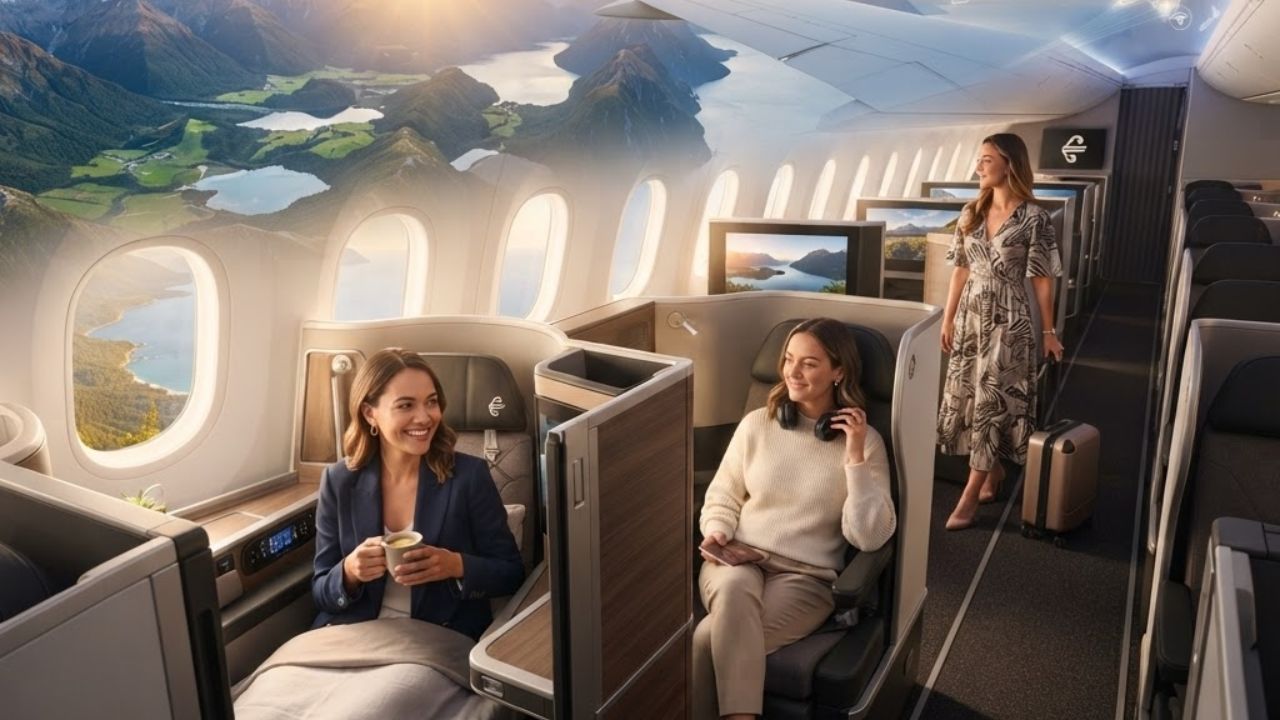
Image generated by AI
Air New Zealand Reveals Boeing Seven Seven Seven Cabin Design Upgrades with Upgraded Business Premier Suites Launching in May Two Thousand Twenty Seven
[Auckland, July 17, 2026] — Air New Zealand is launching a complete interior redesign of its long-haul passenger fleet, introducing upgraded Business Premier suites and refreshed Economy cabins. The retrofitting program, scheduled to enter service in May 2027, will modernize the carrier's Boeing 777-300ER aircraft, ensuring a more consistent cabin experience across its international route network. The primary keyword "Air New Zealand Boeing 777-300ER cabin upgrades" is introduced here.
Retrofitting the Long-Haul Fleet to Improve Passenger Comfort
Aviation reports indicate that Air New Zealand will refresh the interiors of its Boeing 777-300ER widebody fleet. The design updates are focused on the Business Premier and Economy cabins, aligning the aircraft with the modern interior configuration recently rolled out across the airline's Boeing 787-9 Dreamliner fleet.
For international passengers departing from Auckland Airport (AKL), these cabin changes represent a major update to the carrier's long-haul travel options. The airline operates some of the longest nonstop routes in the world, including flights to North America and Asia, where seat comfort and cabin atmosphere are primary factors in passenger choices.
The retrofit project allows the carrier to extend the operational life of its existing Boeing 777-300ER aircraft while maintaining competitive cabin offerings against global airlines. As supply chain constraints and manufacturer delays slow the delivery of new aircraft, retrofitting existing fleets has become a common strategy for airlines seeking to update their passenger experience.
Technical Specifications and Cabin Class Enhancements
The interior upgrade program focuses on major modifications to seat structures, entertainment systems, and cabin finishes. The table below outlines the key parameters of the retrofitted cabin classes:
| Passenger Cabin Class | Redesigned Seat Configuration | Key Onboard Features | Passenger Transit / Experience Focus | Rollout Timeline |
|---|---|---|---|---|
| Business Premier | Forward-Facing Suites with Privacy Doors | Lie-flat beds, larger screens, direct aisle access, extra storage, charging ports | Premium business and leisure travelers on ultra-long-haul routes | Commencing May 2027 |
| Premium Economy | Standard Configuration (Unchanged) | No structural updates planned in this specific retrofitting cycle | Middle-tier passenger segment | Not Included in Program |
| Economy Class | Refreshed Seat Layout | Upgraded seat cushioning, modern cabin finishes, improved inflight entertainment | Budget-conscious international passengers and families | Commencing May 2027 |
Redesigned Business Premier Cabin Features
The most significant change in the 777-300ER fleet is the introduction of the new Business Premier cabin. The airline has opted for a forward-facing layout that replaces the older herringbone configuration, addressing passenger requests for improved privacy and views during flight:
- Sliding Privacy Doors: Each suite features a sliding door, allowing passengers to close off their personal space from the aisle.
- Direct Aisle Access: The seating configuration ensures that every Business Premier passenger can access the aisle without disturbing neighboring travelers.
- Fully Flat Beds: The seats convert into fully flat beds, designed to improve comfort and sleep quality on overnight transpacific flights.
- Upgraded Technology: The suites are equipped with larger high-definition entertainment screens, wireless charging pads, and USB-C power ports to accommodate passenger electronics.
- Dedicated Storage: Integrated storage compartments allow passengers to keep personal items close by during flight.
Industry Context and Strategic Fleet Refurbishment
The decision to upgrade the Boeing 777-300ER fleet reflects a broader trend in the global aviation industry, where airlines are investing in existing cabins to keep pace with changing passenger expectations. High demand for premium travel, combined with delays in new aircraft deliveries, has prompted carriers to invest in refurbishment programs.
By modernizing its 777-300ER aircraft, the carrier establishes product consistency with its newer Boeing 787-9 fleet. This consistency helps prevent passenger disappointment when aircraft substitutions occur. The updated cabins also help the airline defend its market share on key competitive routes between New Zealand and the United States, where US carriers are also deploying retrofitted or newly delivered widebody aircraft.
Why This Matters (Information Gain)
The cabin redesign program represents a change in the airline's approach to cabin configuration. By shifting from the legacy herringbone layout—where passengers faced the aisle rather than the window—to a forward-facing configuration with privacy doors, the carrier is aligning with modern business class standards.
For passengers, the implementation of sliding doors in business class has become a key feature in cabin selection. However, retrofitting these complex suites requires careful weight management. Sliding doors, larger screens, and premium seat structures add weight to the aircraft, which can impact fuel burn and range on ultra-long-haul sectors. The airline's ability to integrate these premium suites without reducing the aircraft's range on challenging transpacific routes shows the engineering advances in modern lightweight seat design.
Related Travel Guides
- United Airlines Launches Daily Nonstop Flights Linking Northwest Arkansas with Newark Airport Opening One Stop Routes to Global Destinations
- Flydubai Expands Thailand Operations with Second Daily Flight to Bangkok Don Mueang alongside New Middle East and African Routes in Summer 2026
- Qatar Airways Resumes Nonstop Flights Connecting Tokyo Haneda with Doha Restoring Dual Airport Operations in Japan Capital Region
Disclaimer
This article is for informational and educational purposes only. It does not constitute legal, financial, or professional advice. While we strive to provide accurate and up-to-date information, travel policies, regulations, and conditions change rapidly. Always verify information with official sources before making travel decisions. Nomad Lawyer makes no representations about the accuracy, reliability, completeness, or suitability of the information provided. Readers should consult qualified professionals for advice specific to their circumstances. The views expressed in this article are those of the author and do not necessarily reflect the views of Nomad Lawyer.
Kunal K Choudhary
Co-Founder & Contributor
A passionate traveller and tech enthusiast. Kunal contributes to the vision and growth of Nomad Lawyer, bringing fresh perspectives and driving the community forward.
Learn more about our team →