
Air Canada's A350-1000 Order Signals Major Fleet Shift, Opening Ultra-Long-Range Routes Beyond Boeing's Reach
Breaking airline news and aviation industry updates for 2026.

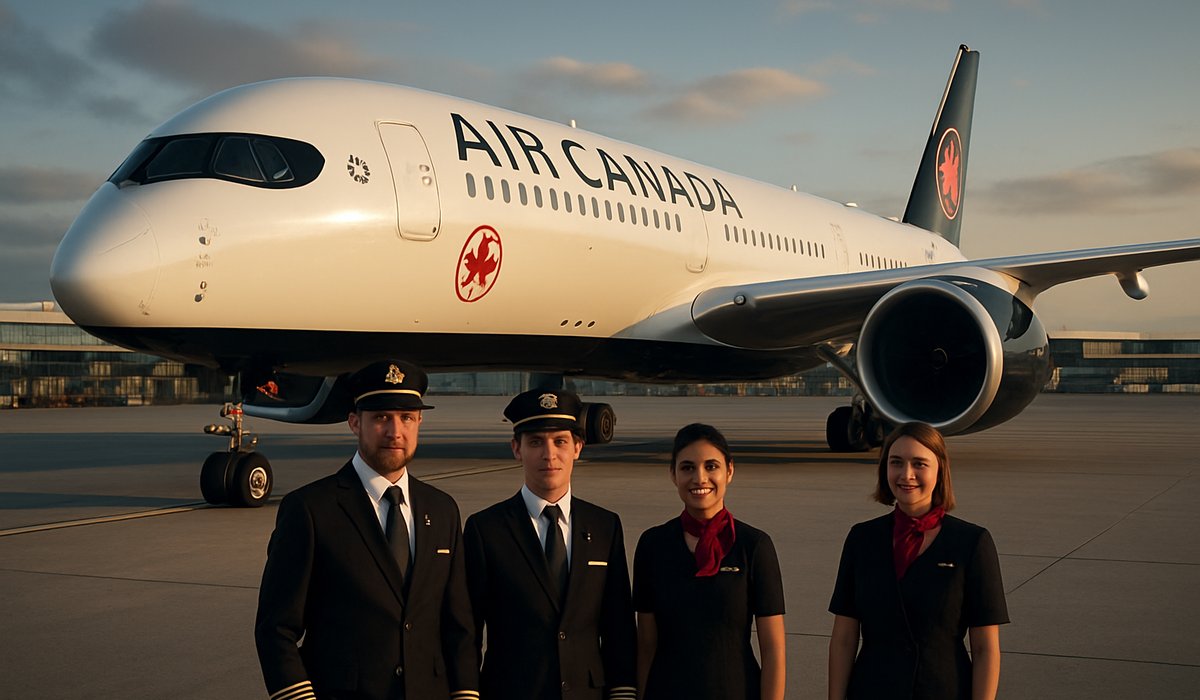
Image generated by AI
Air Canada's A350-1000 Order Signals Major Fleet Shift, Opening Ultra-Long-Range Routes Beyond Boeing's Reach
The Canadian carrier's commitment to eight Airbus jets marks a pivotal departure from decades of Boeing reliance, reshaping competitive dynamics in transatlantic and transpacific aviation
Strategic Fleet Transformation Reshapes Air Canada's Global Ambitions
Air Canada has made a landmark decision that will fundamentally alter its international network strategy. The airline has confirmed a firm order for eight Airbus A350-1000 aircraft—a move that represents both a decisive break from its historical dependence on Boeing for long-haul operations and a strategic bet on enhanced route flexibility.
The acquisition underscores a broader industry trend in which carriers are reassessing their fleet compositions to unlock operational capabilities previously unavailable to them. For Air Canada, the transition from its aging Boeing 777-300ER fleet to the newest-generation A350-1000 aircraft opens a critical competitive advantage: the ability to operate nonstop services on ultra-long-range routes that current widebody aircraft simply cannot sustain economically.
Unlocking Previously Impossible Routes
The technical specifications of the A350-1000 create substantial opportunities for network expansion. The aircraft's superior fuel efficiency, longer maximum range, and reduced operating costs per available seat kilometer position Air Canada to introduce service to destinations currently requiring connecting flights or served only by competitors with more modern fleets.
The Boeing 777-300ER, which has served as Air Canada's workhorse for premium long-distance travel, reaches its operational ceiling in terms of range and payload capacity. The A350-1000, by contrast, combines a maximum range exceeding 8,000 nautical miles with cabin configurations that maximize revenue opportunities on these demanding segments.
Implications for Canadian Aviation and Industry Competition
This procurement decision arrives at a critical juncture in global aviation recovery. As fuel prices remain volatile and operational efficiency becomes paramount, carriers worldwide are prioritizing modern, fuel-efficient aircraft. Air Canada's commitment demonstrates confidence in sustained international travel demand while positioning the carrier to maintain competitive pricing pressure on contested long-haul routes.
The move also reflects broader supplier diversification within the North American aviation sector, historically dominated by Boeing aircraft. For Airbus, securing Air Canada as a customer for its premium widebody product validates the A350 program as the preferred choice for carriers seeking to maximize profitability on ultra-long-range operations.
Air Canada's order is expected to reshape capacity deployment across the transatlantic and transpacific markets, potentially triggering competitive responses from rival carriers operating legacy widebody fleets.
FAQ: Air Canada A350-1000 and Modern Aviation Strategy
Q1: When will Air Canada's first A350-1000 aircraft enter service? Aircraft delivery timelines typically span 2025-2028, depending on production schedules and customization requirements.
Q2: Which routes will Air Canada prioritize with its new A350-1000 fleet? The carrier is expected to focus on underserved European and Asian destinations previously requiring connections or operated by competitors.
Q3: How do A350-1000 fuel costs compare to the Boeing 777-300ER? Modern Airbus aircraft achieve 20-25% better fuel efficiency, reducing per-seat operating expenses on long-haul routes.
Q4: Will the A350-1000 order affect Air Canada's current airline fees and baggage policies? Lower operational costs could theoretically enable competitive pricing, though revenue management strategies ultimately determine final fares.
Q5: Why is this transition significant for the aviation industry? It signals accelerating fleet modernization across North America and validates next-generation widebody technology as essential for profitability in post-pandemic aviation markets.
Related Travel Guides
Flight Delay Compensation Guide 2026
Understanding Airline Route Changes
Airport Security Process Updated (2026)
External Resources
Disclaimer
This article is for informational and educational purposes only. It does not constitute legal, financial, or professional advice. While we strive to provide accurate and up-to-date information, travel policies, regulations, and conditions change rapidly. Always verify information with official sources before making travel decisions. Nomad Lawyer makes no representations about the accuracy, reliability, completeness, or suitability of the information provided. Readers should consult qualified professionals for advice specific to their circumstances. The views expressed in this article are those of the author and do not necessarily reflect the views of Nomad Lawyer.
Kunal K Choudhary
Co-Founder & Contributor
A passionate traveller and tech enthusiast. Kunal contributes to the vision and growth of Nomad Lawyer, bringing fresh perspectives and driving the community forward.
Learn more about our team →