
Severe Weather Triggers Massive Travel Chaos as Air Canada Suffers 34 Cancellations and 71 Delays Across Toronto, Edmonton, and Calgary: Latest Airline News
As brutal wind systems batter western Canada, Air Canada's network completely collapses, leaving thousands of desperate passengers stranded across major hubs including Toronto, Edmonton, and Calgary.

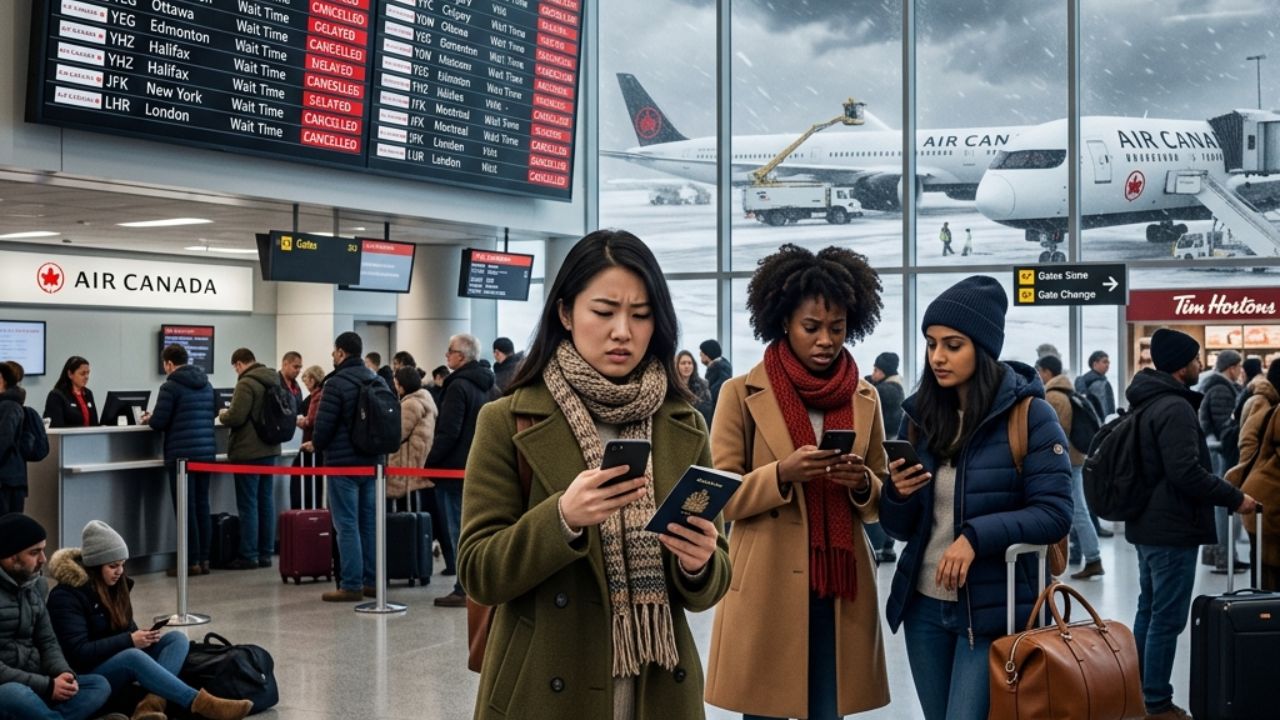
Image generated by AI
A Catastrophic Breakdown of the Canadian Aviation Network
While the global passenger network relies heavily on Canada for seamless North American and transatlantic connectivity, this critical aviation corridor has just suffered a terrifying, systemic operational collapse. Delivering highly urgent, critical airline news, verified aviation data confirms that thousands of desperate travelers are currently trapped in severe travel chaos across major hubs including Toronto, Edmonton, and Calgary. While furious passengers attempt to navigate this unprecedented wave of airport disruptions, these exclusive aviation updates reveal that Air Canada is fiercely battling to stabilize its shattered network after officially recording 34 outright flight cancellations and a staggering total of 71 severe delays. With highly lucrative domestic and international routes to New York, London, Vancouver, and Montreal violently thrown off schedule, this weather-induced operational breakdown has instantly triggered a massive chain reaction, plunging the broader Canadian aviation sector into logistical paralysis.
Expanded Overview: The Scale of the Air Canada Disruption
The strategic execution of recovery operations at these mega-hubs serves as a massive, undeniable test of Air Canada's operational resilience. Historically, the carrier is well-equipped to handle extreme Canadian weather. However, the sheer, unprecedented intensity of this current storm system—triggering 105 total operational disruptions—has pushed ground handling, customer service, and airline logistics teams to the absolute brink of failure.
By aggressively attempting to manage the terrifying backlog, Air Canada is being forced to alter crew schedules, brutally delay aircraft rotations, and hold thousands of connecting passengers in increasingly crowded, uncomfortable terminals. What should have been routine journeys for families heading on vacations, corporate executives rushing to meetings, and international tourists making transatlantic connections have violently transformed into exhausting ordeals. Families are refreshing their mobile applications in desperation as departure boards flash an endless stream of delay notifications, heavily highlighting how quickly a disruption at a major airline hub can completely destroy the national transportation grid.
Section-Wise Breakdown of the Hub Collapse
Edmonton and Calgary Under Siege
The absolute epicenter of this operational nightmare is rooted in western Canada. A brutal, severe wind system aggressively moved through Alberta, generating terrifying wind gusts reaching up to 90–100 km/h. These extreme meteorological conditions made safe aircraft departures, arrivals, and basic ground services physically impossible. Edmonton International Airport emerged as one of the most severely affected facilities, facing a massive surge in ground stops. The aircraft positioning issues and violent scheduling disruptions in Edmonton and Calgary instantly created a severe ripple effect, paralyzing aircraft that were supposed to be operating transcontinental routes later in the day.
Toronto Pearson Absorbs the Shockwave
Simultaneously, travelers utilizing Toronto Pearson International Airport—Canada's busiest and most critical aviation hub—experienced massive, cascading challenges. Because the Canadian aviation network is so heavily interconnected, the extreme delays in Alberta quickly translated into massive scheduling complications for incoming and outgoing flights in Toronto. Air Canada dispatchers desperately attempted to reposition aircraft and crews, but numerous domestic and international services experienced significant delays. Highly critical routes linking Toronto with major global destinations like New York and London were heavily delayed, destroying the itineraries of overseas travelers.
Navigating Canadian Passenger Rights
From a consumer protection perspective, this massive failure has triggered widespread confusion regarding Canada’s Air Passenger Protection Regulations (APPR). Because this specific breakdown was caused by extreme wind gusts, airlines classify the disruption as heavily "outside carrier control." While Air Canada is legally mandated to provide assistance, rebooking options, and operational support—including potential meal vouchers and hotel accommodations for extended delays—they are generally shielded from paying the massive financial compensation penalties associated with preventable operational failures. Passengers are currently flooding customer service lines, desperately seeking clarity on what provisions they are actually entitled to receive.
Air Canada Weather Disruption Metrics & Affected Operations Table
To fully comprehend the highly severe operational parameters and massive logistical breakdown dictating this crisis, the following table explicitly details the core disruption metrics, affected hubs, and driving factors behind the collapse:
| Operational Metric / Affected Hub | Verified Disruption & Logistics Data |
|---|---|
| Total Air Canada Disruption | 105 operational disruptions logged |
| Cancellation & Delay Breakdown | 34 outright cancellations and 71 delays |
| Primary Epicenter of Chaos | Edmonton and Calgary (Alberta weather systems) |
| Eastern Hub Impact | Toronto Pearson (YYZ) severely bottlenecked by cascading delays |
| Primary Disruption Trigger | Severe wind gusts reaching 90–100 km/h |
| Severely Paralyzed Routes | New York, London, Vancouver, Montreal |
| Regulatory Passenger Protection | APPR mandates assistance; compensation waived for weather |
Passenger Impact: Stranded in the Transit Trap
For the modern domestic commuter and international tourist, the passenger impact of this massive hub collapse is financially and emotionally devastating. The modern demographic is increasingly demanding absolute logistical speed, actively turning away from travel itineraries crippled by heavily delayed flights.
Passengers trapped across Toronto, Edmonton, and Calgary immediately experienced the massive terror of missing highly critical onward transatlantic connections or losing entire days of their expensive vacations. Families traveling for vital reunions and professionals heading to non-negotiable business meetings found themselves subjected to extended, exhausting airport stays. With customer service desks completely overrun and airline applications crashing under the weight of rebooking requests, passengers were forced to endure hours of extreme uncertainty, heavily highlighting the severe emotional toll exacted when the Canadian aviation system suddenly stops functioning.
Industry Analysis: The Vulnerability of Interconnected Networks
From an industry operations perspective, the Air Canada delays highlight a highly terrifying reality for global aviation planners. Travel analysts fiercely argue that modern aviation operates within a highly interconnected, extremely fragile system. Severe wind storms in Alberta are a localized meteorological event, but the inability to rapidly recover exposes a severe structural weakness in network design.
By relying so heavily on aircraft rotation schemes that bounce planes continuously between western Canada and Toronto, airlines expose their entire networks to cascading failures. A grounded plane in Calgary at 8:00 AM mathematically guarantees a delayed departure to London out of Toronto at 6:00 PM. This massive disruption forces carriers to recognize that investing heavily in aircraft redundancy and highly advanced, AI-driven scheduling software is absolutely non-negotiable to survive the increasingly violent weather variability crippling modern travel.
Conclusion: A Highly Volatile Horizon for Canadian Aviation
The sudden, violent wave of 34 cancellations and 71 delays across Air Canada's network is exponentially more than a routine bad weather day—it represents a massive, highly visible failure of the national transit system's ability to absorb shock. By completely paralyzing flights out of massive global destinations like Toronto and Edmonton, this disruption has proven that even the most experienced legacy carriers remain terrifyingly vulnerable to severe operational collapse. As Air Canada executives desperately attempt to reposition aircraft and manage passenger connections, thousands of travelers are urged to fiercely monitor their flight statuses and navigate their APPR rights while the aviation sector struggles to clear the massive logistical backlog.
Key Takeaways
- Massive Air Canada Collapse: The carrier suffered a catastrophic operational breakdown, recording 34 flight cancellations and 71 delays.
- Western Canada Battered: Severe wind gusts reaching 90-100 km/h completely paralyzed operations in Edmonton and Calgary.
- Toronto Pearson Gridlock: Canada's largest hub absorbed massive shockwaves, heavily delaying critical flights to New York and London.
- Total Network Disruption: 105 total disruptions violently destroyed domestic and international connecting itineraries.
- APPR Rights Activated: Passengers are eligible for rebooking and assistance, though direct compensation is waived due to extreme weather classifications.
Disclaimer: The delay metrics, specific cancellation numbers, and affected airline routing data presented in this report are based on official operational figures for Air Canada and Canadian airport authorities at the time of the incident. Network capacity, specific flight recovery timelines, and carrier rebooking protocols are highly volatile and subject to continuous operational change. Domestic and international travelers are urgently advised to monitor their specific booking status directly via the Air Canada official mobile application and thoroughly review APPR assistance eligibility before leaving the airport.
Disclaimer
This article is for informational and educational purposes only. It does not constitute legal, financial, or professional advice. While we strive to provide accurate and up-to-date information, travel policies, regulations, and conditions change rapidly. Always verify information with official sources before making travel decisions. Nomad Lawyer makes no representations about the accuracy, reliability, completeness, or suitability of the information provided. Readers should consult qualified professionals for advice specific to their circumstances. The views expressed in this article are those of the author and do not necessarily reflect the views of Nomad Lawyer.
Kunal K Choudhary
Co-Founder & Contributor
A passionate traveller and tech enthusiast. Kunal contributes to the vision and growth of Nomad Lawyer, bringing fresh perspectives and driving the community forward.
Learn more about our team →