
U.S. Air Force Retires Iconic T-38 Talon After Six Decades, Transitions to Boeing's Next-Generation T-7A Red Hawk
Breaking airline news and aviation industry updates for 2026.

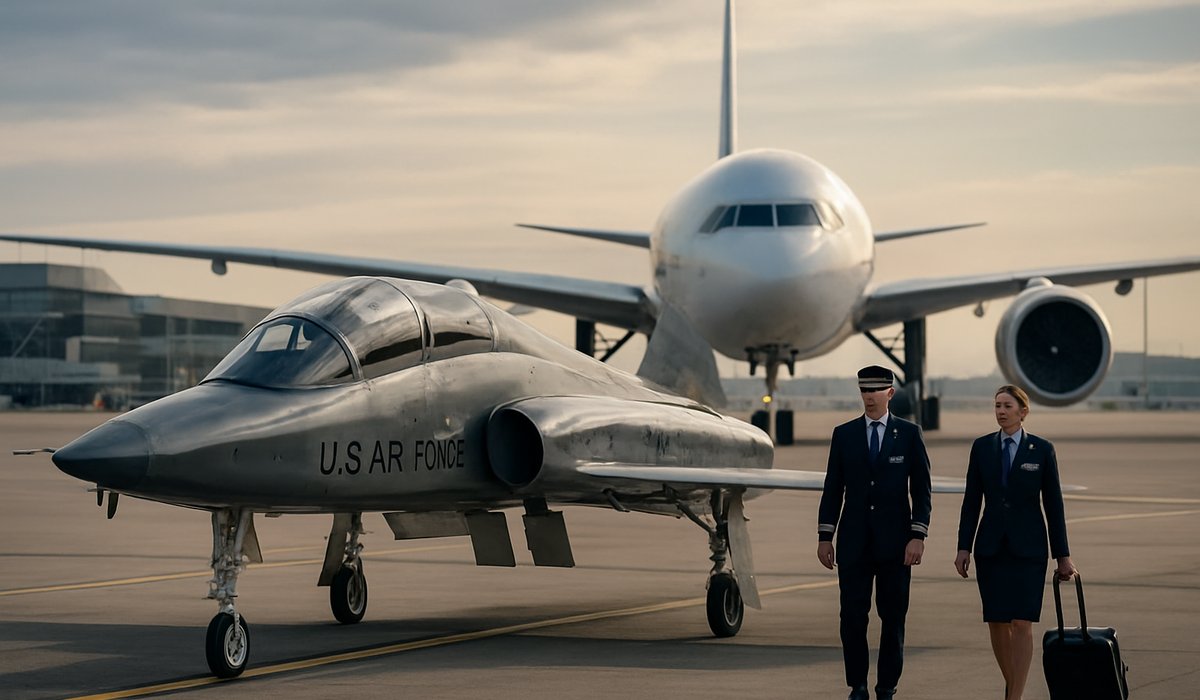
Image generated by AI
U.S. Air Force Retires Iconic T-38 Talon After Six Decades, Transitions to Boeing's Next-Generation T-7A Red Hawk
A historic shift in pilot training as the military replaces its longest-serving aircraft with cutting-edge technology
End of an Era for America's Training Fleet
The United States Air Force is officially retiring one of aviation's most enduring aircraft after more than 60 years of continuous operational service. The Northrop Grumman T-38 Talon, which has trained generations of military aviators since its initial deployment, is being phased out in favor of Boeing's advanced T-7A Red Hawk trainer, marking a significant modernization effort within the global aviation defense sector.
The decision, greenlit for full production this month, represents a watershed moment for military aviation as the USAF acknowledges that the supersonic trainer—designed to simulate combat operations—can no longer adequately prepare pilots for contemporary fighter jets and bombers that have fundamentally transformed over the past six decades.
The Technology Gap Widens
The core challenge facing military leadership involves a stark reality: aircraft technology has evolved at an exponential pace, leaving the T-38 increasingly obsolete as a training platform. Modern fighters and strategic bombers now operate with advanced avionics, stealth capabilities, autonomous systems, and network-centric warfare architectures that bear little resemblance to what the Talon was engineered to emulate.
"The operational environment has fundamentally changed," military analysts note, pointing to the emergence of fifth-generation fighter systems, artificial intelligence integration, and sophisticated air defense networks now prevalent in global military arsenals.
Boeing's T-7A Red Hawk Takes Center Stage
The T-7A Red Hawk, developed through Boeing's partnership with Saab, represents a quantum leap forward in military pilot training. The new platform incorporates digital cockpit architecture, advanced simulation integration, and adaptability to emerging combat scenarios—capabilities essential for preparing pilots to operate next-generation tactical aircraft.
The transition underscores broader trends within the aviation and defense industries, where legacy systems face retirement pressure as technological obsolescence accelerates across military platforms worldwide.
Industry Implications
The retirement of the T-38 carries ripple effects throughout the aerospace sector, potentially influencing pilot training protocols across allied air forces and signaling increased defense spending on modernization initiatives. This shift also reflects a global pattern where aging military aviation fleets are being systematically replaced with contemporary systems.
FAQ: Military Aviation Training and Fleet Modernization
Q: How long has the T-38 Talon been in service with the U.S. Air Force? A: The T-38 has served continuously for over 60 years, making it one of the longest-serving military aircraft platforms in aviation history.
Q: What makes the Boeing T-7A Red Hawk better suited for modern pilot training? A: The Red Hawk features digital avionics, advanced simulation integration, and adaptability to contemporary combat scenarios that the aging T-38 cannot replicate.
Q: Will other countries' air forces follow the U.S. in retiring older training platforms? A: Likely yes—modernization pressure affects allied air forces globally, potentially triggering similar fleet transitions within NATO and partner nations.
Q: What is the approximate cost difference between maintaining legacy trainers versus acquiring new platforms? A: While specific figures vary, maintaining aging aircraft typically generates escalating maintenance costs, making new acquisitions economically advantageous over extended timelines.
Q: How does pilot training modernization impact overall military readiness? A: Advanced training systems better prepare pilots for operational environments, directly enhancing tactical effectiveness and reducing accident rates during transition to operational aircraft.
Related Travel Guides
Disclaimer
This article is for informational and educational purposes only. It does not constitute legal, financial, or professional advice. While we strive to provide accurate and up-to-date information, travel policies, regulations, and conditions change rapidly. Always verify information with official sources before making travel decisions. Nomad Lawyer makes no representations about the accuracy, reliability, completeness, or suitability of the information provided. Readers should consult qualified professionals for advice specific to their circumstances. The views expressed in this article are those of the author and do not necessarily reflect the views of Nomad Lawyer.
Preeti Gunjan
Contributor & Community Manager
A passionate traveller and community builder. Preeti helps grow the Nomad Lawyer community, fostering engagement and bringing the reader experience to life.
Learn more about our team →