
Why Advanced Stealth Fighters Are Ditching Internal Guns for Next-Gen Missile Systems in 2026
Modern stealth fighters prioritize beyond-visual-range combat over dogfighting. Here's why the F-35, F-22, and sixth-generation jets are abandoning internal cannons.

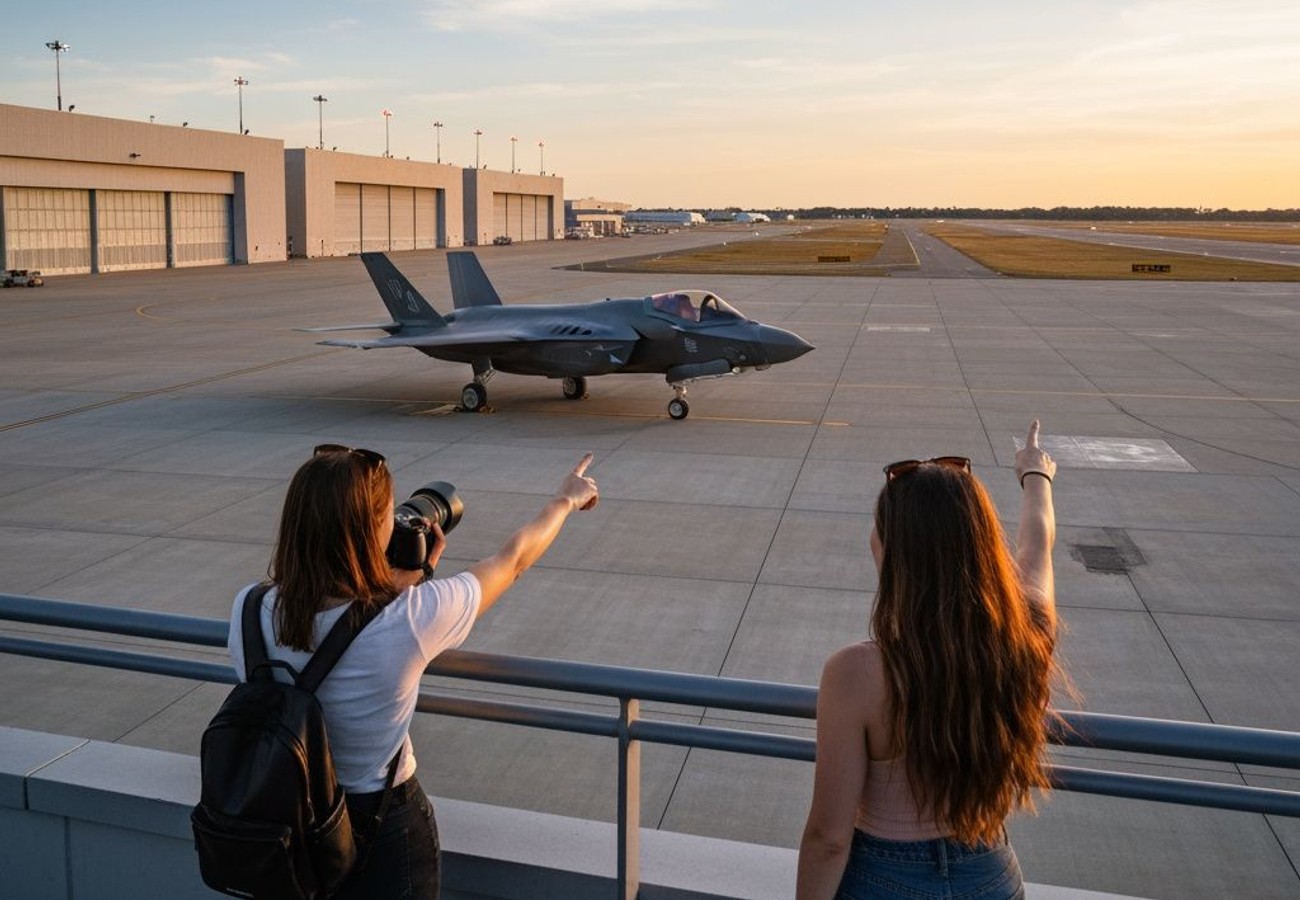
Image generated by AI
The era of dogfighting is officially dead. Modern stealth fighters are being designed without internal guns, and the reasons reveal a fundamental shift in how nations wage aerial warfare.
I've covered military aviation for years, and this trend represents one of the most consequential changes in combat aircraft design since stealth technology itself. The world's most advanced jets—including the Lockheed Martin F-35 Lightning II and F-22 Raptor—are moving away from internal cannons. Future sixth-generation fighters will take this concept even further, with programs like the Boeing F-47 and BAE Tempest ditching guns entirely.
This isn't negligence or cost-cutting. It's a calculated strategy rooted in how modern air combat actually happens.
The Dogfight Is Dead—Long-Range Engagement Wins
Beyond-Visual-Range (BVR) combat has fundamentally transformed air superiority. Today's stealth fighters detect and engage threats using advanced radar, sensor fusion technology, and long-range missiles—often before the enemy appears on a visual display.
Reddit: "If a stealth fighter gets close enough to use a gun, something has already gone catastrophically wrong." — r/military
The math is brutal. Using an internal cannon requires a fighter to:
- Approach the target at close range
- Point its nose directly at the opponent
- Operate within mere feet of hostile forces
These conditions destroy the entire advantage of stealth technology. A F-35 pilot using a gun has already lost invisibility and tactical superiority. That's an unacceptable risk calculus.
Modern air forces instead invest in missile technology. The AIM-120 AMRAAM and emerging hypersonic systems allow pilots to neutralize threats from dozens of miles away while remaining undetected. Electronic warfare capabilities, networked sensor fusion, and drone integration extend engagement distances even further.
Guns become redundant.
Fifth-Generation Compromise: The F-35 Dilemma
The F-35A variant includes an internal M61A2 Vulcan 20mm cannon for emergency dogfighting and ground attack. But the F-35B and F-35C variants tell a different story.
Design constraints matter. The F-35B requires a vertical lift system for short takeoff and vertical landing (STOVL) operations—a space-hungry mechanism that crowds the airframe. The F-35C incorporates reinforced structures for carrier deck operations, consuming additional internal volume.
According to the U.S. Department of Defense, both variants sacrifice internal gun capacity to accommodate mission-critical systems. Instead, they rely on external gun pods—a less stealthy but practical compromise.
The trade-off is telling: stealth and advanced weapons systems matter more than close-range firepower.
Sixth-Generation: The Future Doesn't Need Guns
Sixth-generation fighter programs are reshaping the entire concept of air combat. These jets won't operate alone.
Instead, they'll command networks of autonomous Collaborative Combat Aircraft—"loyal wingman" drones that perform reconnaissance, carry weapons, and absorb risk. This distributed warfare model extends a single crewed fighter's combat reach far beyond its own airframe.
Imagine a F-47 pilot controlling three armed drones simultaneously, each equipped with missiles and sensors. Why would that pilot ever need a gun? The enemy threat gets neutralized at distance, with minimal exposure.
Directed-energy weapons add another layer. Laser systems can engage incoming threats at light speed without ammunition constraints. Engineers at major defense contractors are investing heavily in this technology as a long-term replacement for kinetic weapons.
Why Military Planners Remain Cautious
Despite this optimism, defense experts acknowledge a brutal truth: history surprises.
The McDonnell Douglas F-4 Phantom II entered service in the 1950s without a cannon, assuming missiles would dominate Vietnam-era air combat. Pilots quickly discovered that close-range engagements still happened. The USAF retrofitted guns on later variants.
This lesson drives current thinking. While stealth fighters move decisively away from internal cannons, military planners maintain backup systems and flexibility. Future combat scenarios might challenge assumptions about detection, stealth degradation, or unforeseen tactical situations.
But the trajectory is clear: guns are becoming legacy systems, not essential weapons.
The Broader Implication
This shift represents more than hardware design. It reflects a philosophical change in how advanced nations approach military dominance.
Stealth, sensor fusion, networked warfare, and long-range precision dominate modern strategy. Close-range combat—the domain of guns—belongs to older eras.
As military technology continues evolving, future pilots may never fire a cannon in combat. Their victories will come from sensors and missiles, fired from distances where enemy pilots remain unaware they're under threat.
That's the future of air superiority.
The age of the dogfight has given way to the age of the invisible warrior.
Related Travel Guides
Disclaimer
This article is for informational and educational purposes only. It does not constitute legal, financial, or professional advice. While we strive to provide accurate and up-to-date information, travel policies, regulations, and conditions change rapidly. Always verify information with official sources before making travel decisions. Nomad Lawyer makes no representations about the accuracy, reliability, completeness, or suitability of the information provided. Readers should consult qualified professionals for advice specific to their circumstances. The views expressed in this article are those of the author and do not necessarily reflect the views of Nomad Lawyer.
Preeti Gunjan
Contributor & Community Manager
A passionate traveller and community builder. Preeti helps grow the Nomad Lawyer community, fostering engagement and bringing the reader experience to life.
Learn more about our team →