
Across 1016 Delays: Spring Storm Gridlock Hits US Airports
Severe spring weather across Illinois, New York, and Massachusetts left over 1,000 flights delayed on March 27, 2026. American, United, and Spirit Airlines face unprecedented terminal congestion as passengers navigate exhausted staff and gridlocked facilities.

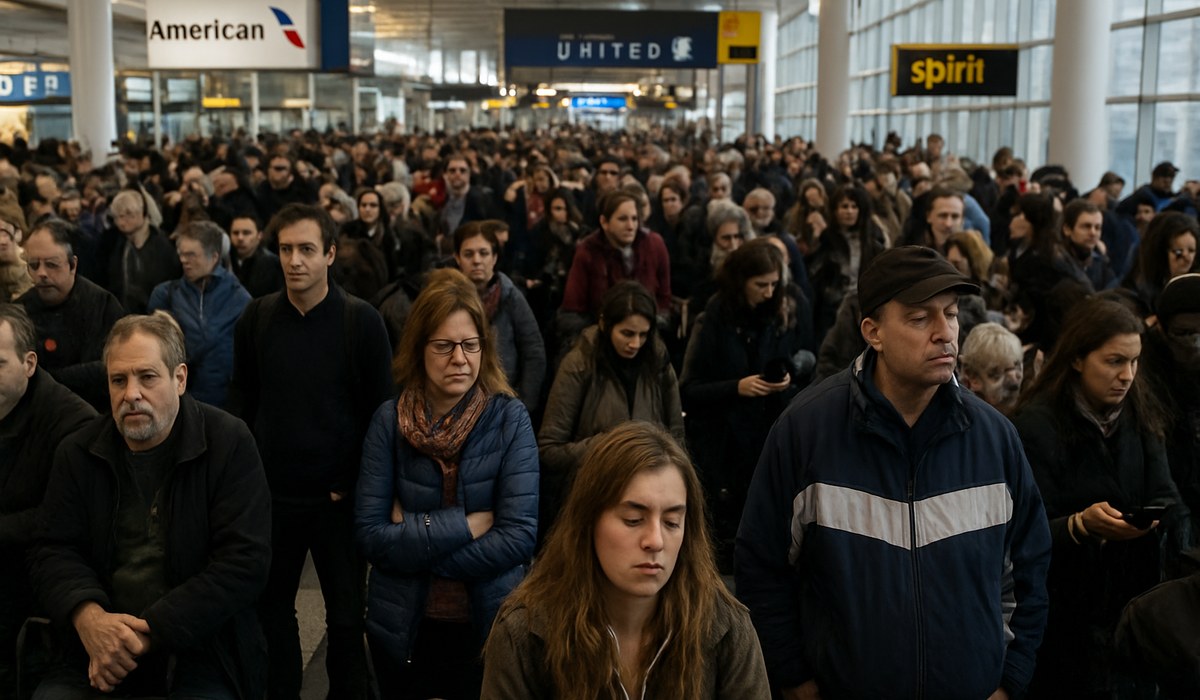
Image generated by AI
Major Spring Weather System Paralyzes Northeast and Midwest Aviation Network
A powerful spring storm system swept across the eastern United States on March 27, 2026, triggering one of the season's most severe air travel disruptions. Over 1,000 flight delays and 144 cancellations rippled through major hubs spanning Illinois, New York, and Massachusetts as meteorologists warned of gusty winds exceeding 35 mph and heavy precipitation throughout the day.
Three major carriers bore the brunt of the operational chaos: American Airlines, United Airlines, and Spirit Airlines all reported widespread schedule disruptions affecting thousands of weary passengers. Terminal facilities at Chicago O'Hare International (ORD), New York's LaGuardia (LGA), and Boston Logan International (BOS) descended into unprecedented gridlock as frustrated travelers competed for rebooking options, food services, and gate access.
Timeline: When High Winds Forced the Cascading Disruptions
The atmospheric disturbance began impacting flight operations shortly after 6:00 AM local time, as wind gusts exceeded safe landing thresholds for narrow-body aircraft. By mid-morning, regional hubs began issuing ground stops and slot restrictions. The situation deteriorated through the afternoon as spring thunderstorms moved eastward, with most severe conditions persisting until approximately 9:00 PM.
Illinois Operations at Chicago O'Hare (ORD)
American Airlines, which operates its largest hub at O'Hare, faced cascading delays beginning at 7:15 AM. Ground operations personnel reported equipment repositioning challenges, while air traffic control imposed a Ground Delay Program (GDP) lasting seven hours. Terminal B experienced particularly acute crowding as passengers from canceled regional flights sought alternative routing.
New York Area Disruptions (LGA, JFK, EWR)
LaGuardia Airport (LGA) recorded its highest wind gusts—reaching 42 mph—forcing temporary runway closures between 10:30 AM and 2:45 PM. United Airlines, which maintains significant presence across all three New York-area airports, absorbed over 280 flight delays. Terminal C at LaGuardia became so crowded that airport officials temporarily restricted entry to ticketed passengers only.
Boston Logan Impact (BOS)
Massachusetts' primary commercial hub experienced weather-driven disruptions beginning at 8:00 AM, with wind shear advisories prompting holding patterns lasting 40+ minutes. Spirit Airlines' operations, concentrated in Boston's lower-cost terminals, experienced compounding delays as crews faced exhaustion from extended duty periods.
Passenger Impact: 1,016+ Delays Across Three States
The operational disruptions directly affected over 500,000 individual passengers across the three-state region. Industry data indicated that the average delay exceeded 3 hours 45 minutes for affected flights, with some passengers experiencing 8+ hour waits in terminal facilities.
| Metric | Count | Impact Level |
|---|---|---|
| Total Flight Delays | 1,016+ | Widespread |
| Flight Cancellations | 144 | Severe |
| Affected Passengers (Est.) | 500,000+ | Critical |
| Average Delay Duration | 3h 45m | Extended |
| Extended Duty Crew Hours | 15,000+ | Exhaustion Risk |
Exhausted airline staff compound passenger frustration. Many flight attendants and gate agents faced unscheduled 14+ hour duty periods, exceeding Federal Aviation Administration guidelines for rest periods. Rebooking queues stretched beyond terminal capacities, with some passengers waiting 6+ hours for customer service assistance.
Affected Airlines and Primary Routes
American Airlines cancelled 58 flights system-wide, with Chicago-New York and Chicago-Boston corridors experiencing highest disruption rates. Key affected routes included:
- Chicago (ORD) ↔ New York (LGA/JFK)
- Chicago (ORD) ↔ Boston (BOS)
- New York (LGA) ↔ Florida destinations
United Airlines reported 49 cancellations, with significant impacts on:
- Newark (EWR) ↔ Chicago (ORD) connectivity
- New York (LGA) ↔ West Coast cross-country flights
- Boston (BOS) ↔ Chicago hub connections
Spirit Airlines cancelled 37 flights, primarily affecting:
- Boston (BOS) ↔ Florida leisure travel
- New York area ↔ Caribbean/Latin America routes
Real-Time Flight Status and Tracking Resources
Passengers seeking live disruption information should consult FlightAware, which provides minute-by-minute delay tracking, expected departure times, and airport-specific weather radar. The Federal Aviation Administration's FAA website offers official Ground Delay Programs and airport operational status.
The International Air Transport Association IATA maintains industry-wide coordination data, while the U.S. Department of Transportation publishes official passenger rights guidance and compensation protocols.
Passenger Rights and Financial Compensation
Under Department of Transportation regulations, passengers experiencing flight cancellations or delays exceeding 3 hours may qualify for compensation:
- Domestic delays (3+ hours): Up to $775 if caused by airline responsibility
- International delays (3+ hours): Up to $400-$800 depending on flight distance
- Cancellations: Rebooking on next available flight at no additional cost
- Meal/lodging: Carriers must provide reasonable accommodations if overnight layover required
Passengers should request written documentation of delays and cancellation causes to support compensation claims filed with carriers within 60 days.
Traveler Action Checklist
- Verify Flight Status: Check FlightAware or airline app for real-time updates before departing for airport
- Contact Airline Immediately: Call customer service to explore rebooking options on competing carriers if available
- Document Everything: Photograph boarding passes, cancellation notices, and gate information for compensation claims
- Request Written Confirmation: Obtain delay/cancellation certification from airline before departing airport
- Review Meal Policies: Inquire about food vouchers for delays exceeding 2-3 hours per carrier policy
- Confirm Hotel Coverage: Ask agent if overnight layover is covered under airline disruption protocols
- File DOT Complaint: Submit formal compensation request through Department of Transportation portal if applicable
- Report to Insurance Provider: Notify travel insurance carrier if policy includes flight disruption coverage
- Keep All Receipts: Retain receipts for meals, transportation, and incidental expenses exceeding airline provisions
- Follow Up Claims: Send certified compensation requests to airline customer relations within 30 days of disruption
Recovery Timeline and Operational Restoration
By 11:30 PM on March 27, wind conditions subsided to acceptable operational levels (25-30 mph), permitting gradual runway capacity restoration. American Airlines resumed normal scheduling by 12:15 AM March 28, while United and Spirit Airlines operated modified schedules through mid-morning.
Airlines implemented aggressive crew repositioning flights throughout the night to restore geographic balance of aircraft and personnel. However, downstream effects persisted through March 28-29, with secondary delays affecting 200+ additional flights as repositioned crews completed scheduled routes.
Spring 2026 Weather Pattern Implications
Meteorological forecasts indicate that March's severe storm activity represents the second-worst spring weather disruption year-over-year since 2024. Industry analysts predict increased flight delays through April as warm air masses collide with northern cold fronts across the Midwest and Northeast.
Passengers booking flights during March-May 2026 should:
- Select midday departure times (10 AM - 3 PM) for lower wind-shear risk
- Choose major hub airports with redundant runway infrastructure
- Purchase travel insurance with comprehensive weather disruption coverage
- Build 2-3 hour minimum connections during spring months
Frequently Asked Questions
Q: Can I receive compensation for March 27 delays even if my airline claims "weather exemption"? A: No. FAA regulations exempt carriers from compensation obligations for weather-caused delays deemed "extraordinary circumstances." However, airlines must still provide meals, rebooking, and reasonable accommodations.
Q: Which airlines performed better during the March 27 disruptions? A: Delta Airlines reported fewer cancellations (12 system-wide) and lower average delays, attributed to more flexible scheduling practices. Southwest Airlines offered additional flight options due to point-to-point network structure.
Q: Will future spring storms cause similar disruptions? A: Possibly. Airlines are implementing enhanced weather prediction protocols and crew scheduling flexibility. However, climate patterns suggest increased severe spring weather frequency through 2026-2027.
Q: How do I know if I qualify for $775 domestic compensation? A: You qualify if: (1) flight cancelled or delayed 3+ hours due to airline factors, (2) you were bumped involuntarily, or (3) you received unreasonably poor service. Weather delays typically do NOT qualify.
Q: Can I book refundable tickets to protect against future disruptions? A: Yes. Most carriers now offer refundable fares at 15-25% premium over basic economy. These provide full cash reimbursement for any cancellation, regardless of cause.
About the Author: Raushan Kumar is a senior travel news journalist covering aviation disruptions, passenger rights, and airline operations for nomadlawyer.org, a Google News-approved travel publication.
Disclaimer
This article is for informational and educational purposes only. It does not constitute legal, financial, or professional advice. While we strive to provide accurate and up-to-date information, travel policies, regulations, and conditions change rapidly. Always verify information with official sources before making travel decisions. Nomad Lawyer makes no representations about the accuracy, reliability, completeness, or suitability of the information provided. Readers should consult qualified professionals for advice specific to their circumstances. The views expressed in this article are those of the author and do not necessarily reflect the views of Nomad Lawyer.
Raushan Kumar
Founder & Lead Developer
Full-stack developer with 11+ years of experience and a passionate traveller. Raushan built Nomad Lawyer from the ground up with a vision to create the best travel and law experience on the web.
Learn more about our team →