
Acoustic Tourism: Central Asia's Singing Dunes and Silk Road Soundscapes
Acoustic tourism emerges as a major travel trend in Central Asia, drawing visitors to document endangered soundscapes across the Silk Road.
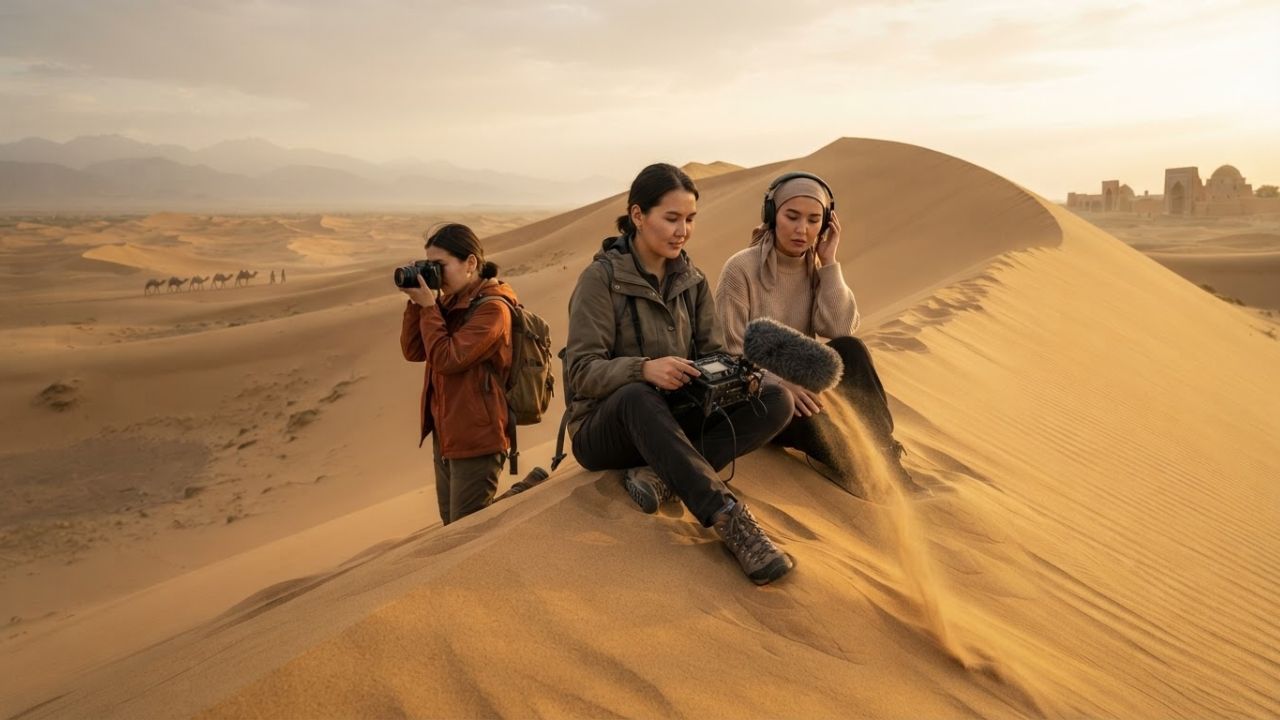
Image generated by AI
Acoustic tourism is emerging as a major travel trend in Central Asia, drawing visitors to document endangered soundscapes across Uzbekistan, Tajikistan, Kyrgyzstan, and Kazakhstan. By tracking natural acoustics, ancient architectural echoes, and rare folk traditions, explorers are mapping a multi-country Silk Road route focused on deep listening rather than traditional sightseeing.
The Local Trend Revealed
The rise of sound tourism reflects a shift in travel culture toward immersive sensory experiences. Soundscape creators are traveling to capture endangered acoustic environments before urban noise pollution permanently alters them. This acoustic highway spans four countries:
- Kazakhstan: Travelers visit the famous Singing Dunes in Altyn-Emel National Park. When dry sand grains slide down steep slopes, the dune generates a low-frequency hum that resembles a pipe organ vibrating across the desert.
- Uzbekistan: Timurid structures in Samarkand and Bukhara feature geometric acoustics designed to amplify sacred recitations. The tilework inside grand mosques and mausoleums acts as a whispering gallery, reflecting soundwaves to produce long reverberation times.
- Tajikistan: The Pamir Highway acts as a natural wind instrument, with wind moving through massive granite canyons to produce deep resonant notes and sub-bass frequencies.
- Kyrgyzstan: Nomadic yurt settlements offer open alpine silence where recorders can capture clear binaural audio, including the plucking of the three-stringed komuz lute and the crackling of open campfires.
Cultural & Environmental Value
For the visitor, the real impact of acoustic tourism is the preservation of cultural heritage and the support of rural communities. Choosing nomadic yurt stays (jailoo tourism) in Kyrgyzstan and hiring local guides in Altyn-Emel National Park directly benefits indigenous families and park rangers rather than global booking corporations.
Acoustic preservation also highlights the impact of environmental noise on natural habitats. In Kazakhstan, park authorities protect the Singing Dunes from off-road vehicle traffic to preserve the delicate sand patterns required for the acoustic phenomenon. According to guidelines from the State Committee for Tourism Development of Uzbekistan, restoring natural soundscapes helps protect local wildlife patterns and supports historical architectural conservation.
Visitor Insider Tips for Acoustic Travel in Central Asia
Local specialists recommend the following tips for acoustic travelers:
- Observe the Off-Peak Window: The best time to travel through Central Asia is during the spring window of May to June or the autumn window of September to October. These shoulder seasons offer comfortable weather, avoiding the extreme desert heat and freezing mountain winds.
- Observe Yurt Etiquette: When visiting nomadic yurts in Kyrgyzstan or Kazakhstan, always remove your shoes before entering. Never step on the threshold (bosogo) of the yurt, as this is culturally considered bad luck.
- Sample Regional Culinary Specialties:
- In Kazakhstan, try Beshbarmak (boiled meat served over flat noodles with onion sauce) or sample traditional Kazy horse meat sausage.
- In Uzbekistan, eat fresh Samarkand bread or try Plöv (rice and mutton pilaf) cooked in a large iron kazan.
- In Kyrgyzstan, sample Kuurdak (fried meat and potatoes).
- Respect Sacred Spaces: When entering historical mosques in Samarkand and Bukhara, dress modestly with shoulders and knees covered. Women should cover their heads with a scarf. Maintain silence to respect others and allow the natural acoustics to be heard.
- Explore Under-the-Radar Spots:
- In Kazakhstan, visit Charyn Canyon (Valley of Castles) for dramatic geological formations and quiet desert acoustics.
- In Uzbekistan, visit the Chor Bakr Memorial Complex outside Bukhara, which features quiet, historic courtyards with remarkable echoes.
- In Kyrgyzstan, stay at high-altitude Son-Kul Lake to hear wind, water, and horse bells in complete tranquility.
Tourism Outlook
The long-term impact of acoustic travel is the development of conservation-minded tourism. By highlighting the acoustic value of historic domes and desert dunes, Central Asian states can build a unique destination identity that encourages slower travel paces, longer stays, and direct support of rural preservation efforts, as monitored by the Kazakhstan Tourism Association.
FAQ: Central Asia Acoustic Tourism
What is acoustic tourism? Acoustic tourism (or sonic tourism) is a travel trend focused on experiencing and recording natural sounds, architectural acoustics, and traditional musical heritage, rather than relying solely on visual sightseeing.
What causes the dunes to "sing" in Kazakhstan? The Singing Dunes in Altyn-Emel National Park produce a low-frequency vibration when dry sand grains slide down steep slopes under the wind, creating a hum that resembles a pipe organ.
Why do Uzbek mosques have unique acoustics? Medieval Timurid architecture in Samarkand and Bukhara was built with precise geometric structures and tilework that reflect soundwaves, creating whispering galleries and long reverberation times.
How does yurt travel benefit local communities? Staying in traditional yurts directly supports nomadic families, helping to preserve nomadic traditions and distribute tourism spending into remote mountain regions.
Related Travel Guides
Disclaimer
This article is for informational and educational purposes only. It does not constitute legal, financial, or professional advice. While we strive to provide accurate and up-to-date information, travel policies, regulations, and conditions change rapidly. Always verify information with official sources before making travel decisions. Nomad Lawyer makes no representations about the accuracy, reliability, completeness, or suitability of the information provided. Readers should consult qualified professionals for advice specific to their circumstances. The views expressed in this article are those of the author and do not necessarily reflect the views of Nomad Lawyer.