
A-10 Warthog Air Force Still Flying into 2026: What Travelers Should Know
The A-10 Warthog Air Force continues operations through 2026 despite decades of retirement proposals. This beloved military aircraft remains essential for close-air-support missions worldwide, affecting airspace and regional travel near active duty bases.

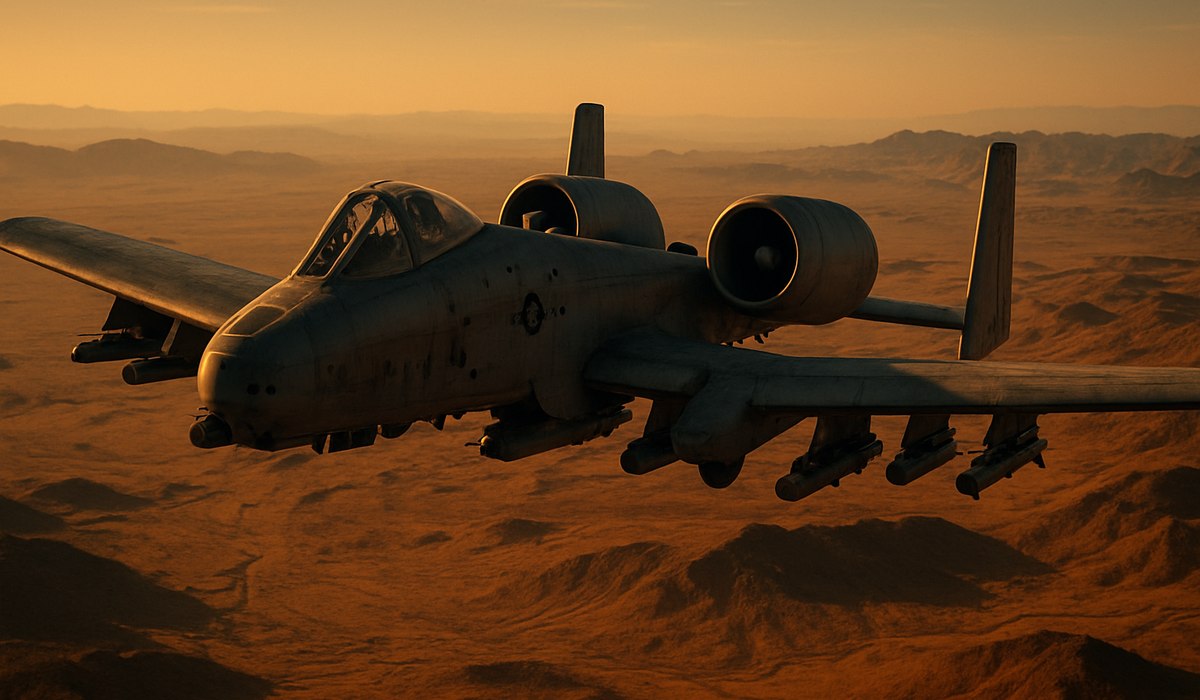
Image generated by AI
The A-10 Warthog Air Force Remains Operational Through 2026
The A-10 Warthog Air Force continues flying combat missions well into 2026, defying repeated Pentagon retirement plans spanning three decades. Military officials announced this week that the iconic close-air-support aircraft will extend operations through the current fiscal year, maintaining its presence at bases across the United States and allied nations. This decision affects travel corridors near active military installations worldwide, as airspace restrictions and operational schedules frequently impact civilian flight patterns and ground transportation near major bases.
The Controversial Origins of the A-10 Warthog
The A-10 Thunderbolt II earned its "Warthog" nickname through an unconventional development path. During the 1960s and 1970s, a group of Air Force innovators known as the Fighter Mafia questioned the service's direction toward increasingly expensive and complex aircraft designs. These advocates pushed for simpler, more cost-effective military aircraft that could perform specialized missions without astronomical budgets.
The A-10 Warthog Air Force initiative emerged partly as a response to Army requests for attack helicopter capabilities. When the Air Force successfully lobbied against the Lockheed AH-56 Cheyenne attack helicopter program, the service needed an alternative close-air-support platform. The resulting A-10 design proved revolutionary: a purpose-built jet optimized for low-altitude operations, heavily armored fuselage, and devastating ground-attack firepower. The aircraft's distinctive appearance—bulky fuselage paired with twin engines—made it instantly recognizable on global military bases where travelers frequent.
Why the Air Force Wanted to Retire It
Pentagon leadership has pursued A-10 Warthog Air Force retirement plans consistently since the 1980s. Military strategists argued that newer fighter jets could perform close-air-support missions more efficiently. Proposed replacements included the F-16 Fighting Falcon and later the F-35 Lightning II, both touted as more versatile platforms.
Cost considerations drove much of this pressure. The Air Force calculated that retiring the aging fleet could redirect billions toward next-generation fighter development. However, these projections underestimated the specialized capabilities the A-10 brought to combat zones. Field commanders repeatedly testified before Congress that no replacement matched the Warthog's low-speed maneuverability, firepower concentration, and pilot survivability in contested airspace.
Unmatched Close-Air-Support Performance
The A-10 Warthog Air Force excels in close-air-support missions through several distinctive features. The aircraft's GAU-8 Avenger rotary cannon fires 30mm rounds at extraordinary rates, delivering devastating firepower against ground targets. Its heavily armored titanium bathtub cockpit protects pilots during low-altitude missions where enemy air defense becomes concentrated.
Operational flexibility distinguishes the A-10 from modern fighter alternatives. The platform can loiter over battle zones for extended periods, a capability the faster F-35 cannot match. Pilots appreciate the aircraft's forgiving handling characteristics and ability to operate from austere forward airfields lacking sophisticated infrastructure. These advantages proved invaluable during recent military operations across multiple regions, compelling continued reliance on the aging platform.
Close-air-support specialists consistently outperform expectations in A-10 Warthog Air Force training exercises and real-world deployments. The combination of sensors, weapons systems, and pilot training creates an unparalleled capability for protecting ground forces in active combat zones. Military experts widely acknowledge that transitioning this mission entirely to other platforms would require substantial capability gaps lasting several years.
Cost-Effectiveness in Modern Operations
Budget constraints significantly influence A-10 Warthog Air Force operational decisions. The service discovered that maintaining existing aircraft proved more economical than developing and producing next-generation replacements. Each flying hour costs substantially less compared to newer fighter jets, extending limited defense appropriations further.
The cumulative investments in A-10 infrastructure, pilot training, and maintenance networks create additional economic pressures toward retention. Decommissioning the fleet would waste existing expertise and specialized support systems. Procurement budgets for advanced fighters already strain Pentagon resources; adding new aircraft procurement accelerates financial pressures.
Operational commanders argue persuasively that the A-10 Warthog Air Force delivers superior cost-to-capability ratios in specific mission sets. When ground forces require dedicated close-air-support, the platform performs with unmatched efficiency. This economic reality, combined with demonstrated performance advantages, explains why retirement proposals consistently face opposition from field commanders and Congressional representatives from military-dependent districts.
A-10 Warthog Air Force Deployment Locations and Specifications
| Specification | Details |
|---|---|
| Aircraft Designation | Fairchild A-10 Thunderbolt II |
| Primary Mission | Close-air support and ground attack |
| Main Armament | GAU-8 Avenger 30mm rotary cannon |
| Service Entry Year | 1976 |
| Current Operational Status | Active through 2026 and beyond |
| Key Advantage | Low-speed maneuverability and firepower concentration |
| Crew Requirements | Single pilot in heavily armored cockpit |
| Typical Combat Loiter Time | 2+ hours over target area |
| Operating Bases | Nellis Air Force Base, Moody Air Force Base, Kunsan Air Base (South Korea), Incirlik Air Base (Turkey) |
What This Means for Travelers
The continued A-10 Warthog Air Force operations create specific considerations for travelers near major military installations:
-
Airspace Restrictions: Expect temporary flight delays or route alterations near active training ranges and operational bases. Flight planning should account for military exercises during peak training seasons.
-
Ground Transportation Timing: Schedule ground transport around base traffic patterns. Military convoy movements occasionally affect civilian road access near installation perimeters, particularly during deployment periods.
-
Noise Considerations: Hotels near air bases may experience increased jet noise during active training cycles. Request rooms on the quiet side of accommodations near Nellis, Moody, or other A-10 operating bases.
-
Security Protocols: Expect enhanced security measures at civilian airports near major military bases. Allow extra time for screening during heightened operational tempos or deployment windows.
-
Local Airfield Services: Understand that civilian airfield access may become restricted during military exercises. Confirm operations status before scheduling private aviation activities near active military installations.
-
Regional Economic Activity: Military personnel movements and training schedules influence local business hours, restaurant availability, and service staffing near bases. Plan accordingly during peak operational periods.
Frequently Asked Questions
Q: When will the A-10 Warthog Air Force finally retire?
A: Current Pentagon plans extend operations through 2026, with potential extensions beyond. No confirmed retirement date exists due to demonstrated capability gaps in replacement aircraft. Congressional pressure and operational demands suggest continued service well into the 2030s.
Q: Why can't the F-35 replace the A-10 Warthog Air Force?
A: The F-35 operates faster, reducing loiter time over combat zones. Close-air-support requires extended low-altitude presence, where the A-10's specialized design excels. The F-35 serves different mission sets better.
Q: Which military bases still operate A-10 Warthog Air Force squadrons?
A: Active squadrons operate from Nellis Air Force Base (Nevada), Moody Air Force Base (Georgia), Kunsan Air Base (South Korea), and Incirlik Air Base (Turkey), among other international locations supporting NATO operations.
**Q: How does the A-10 W
Disclaimer
This article is for informational and educational purposes only. It does not constitute legal, financial, or professional advice. While we strive to provide accurate and up-to-date information, travel policies, regulations, and conditions change rapidly. Always verify information with official sources before making travel decisions. Nomad Lawyer makes no representations about the accuracy, reliability, completeness, or suitability of the information provided. Readers should consult qualified professionals for advice specific to their circumstances. The views expressed in this article are those of the author and do not necessarily reflect the views of Nomad Lawyer.
Raushan Kumar
Founder & Lead Developer
Full-stack developer with 11+ years of experience and a passionate traveller. Raushan built Nomad Lawyer from the ground up with a vision to create the best travel and law experience on the web.
Learn more about our team →