
TSA Security Overhaul 2026: New Checkpoint Rules, ConfirmID Fees, and Biometric Screening
The TSA has fundamentally restructured U.S. airport checkpoints in 2026, introducing a $45 fallback fee for non-REAL ID holders and expanding biometric, touchless screening across major hubs.

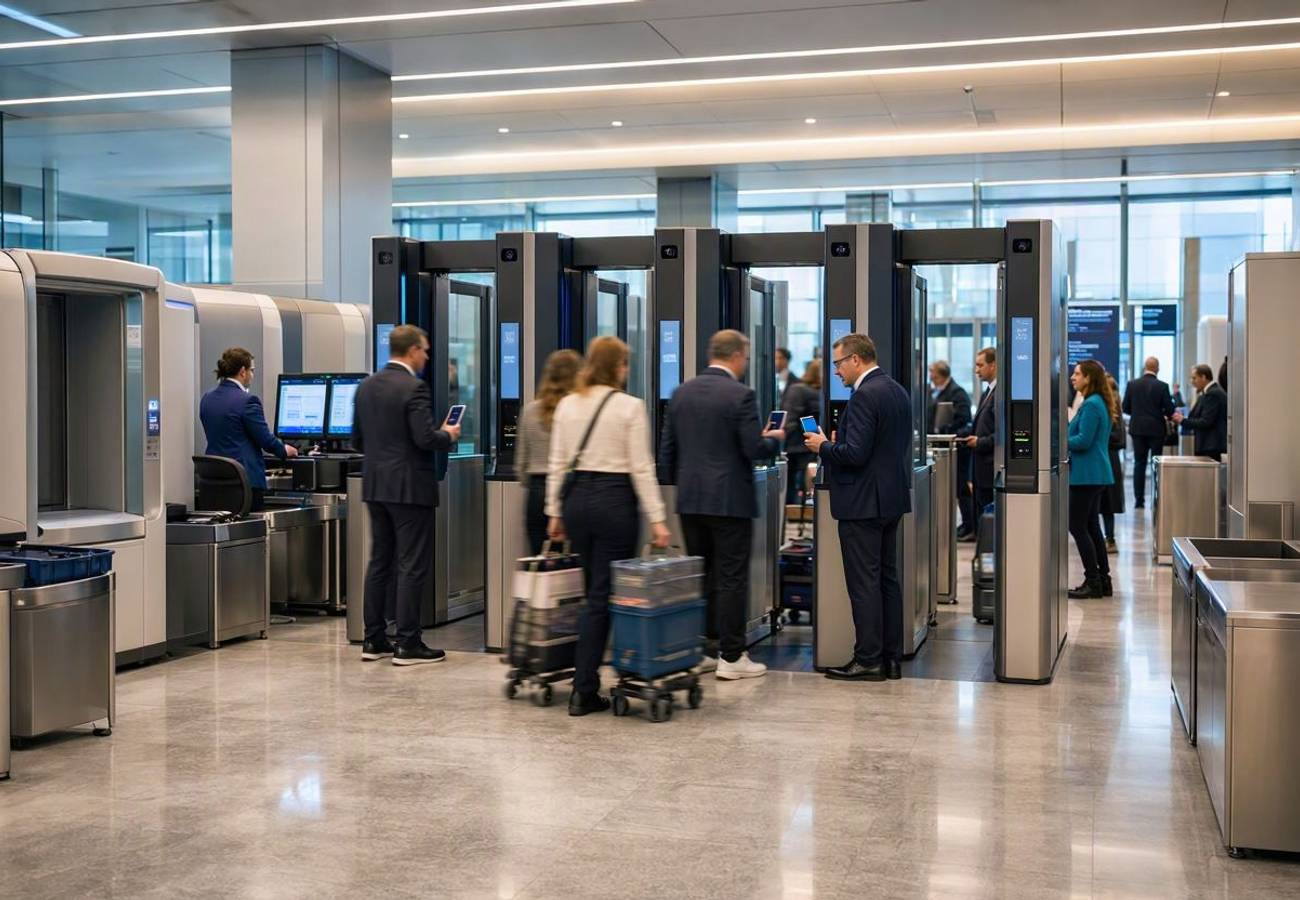
Image generated by AI
A $5.5 billion modernization budget has fundamentally altered the American airport security experience, replacing decades of manual redundancies with biometric verification and high-resolution imaging. For the modern traveler, the "security theater" of the early 2000s—characterized by the ritualistic removal of footwear and electronics—is being dismantled in favor of a tech-centric throughput model managed by the Transportation Security Administration (TSA).
The End of Manual Bottlenecks
The most significant physical shift occurred on July 8, 2025, when the federal government officially terminated the mandate requiring passengers to remove their shoes. This policy, a staple of U.S. travel since 2001, was rendered obsolete by the deployment of advanced imaging technology capable of detecting threats through footwear. The move, announced by Homeland Security Secretary Kristi Noem, removes one of the primary friction points in the screening lane, accelerating the physical flow of passengers from the podium to the scanner.
Parallel to this is the rollout of Computed Tomography (CT) scanners. Unlike traditional X-rays, these machines generate 3-D imagery that officers can manipulate digitally. This capability allows travelers at major hubs, such as Chicago O'Hare and Hartsfield-Jackson Atlanta International, to keep laptops, tablets, and compliant liquids inside their bags. By eliminating the need for separate bins for electronics, the TSA has reduced "bin clutter," which was previously a leading cause of checkpoint congestion.
Identity Verification and the REAL ID Transition
As the 2025 REAL ID enforcement deadline passed, the agency introduced a financial and logistical safety net for non-compliant travelers. In February 2026, the TSA launched ConfirmID, a secondary identity verification service. This system acts as a formal fallback for those lacking a REAL ID-compliant license, though it comes with a specific cost to the passenger.
Furthermore, the shift toward digitization is accelerating. As of September 2026, mobile driver's licenses (mDLs) are accepted at over 250 checkpoints across approximately 20 states and territories. This transition, heavily utilized in California, Georgia, and New York, leverages encrypted smartphone hardware to verify identities, reducing the reliance on physical plastic cards.
2026 TSA Protocol & Technology Matrix
| Feature | Old Protocol (Pre-2025) | New Protocol (2026 Standard) | Impact on Traveler |
|---|---|---|---|
| Footwear | Mandatory removal | Shoes-on screening | Faster lane transit |
| Electronics | Must be removed from bags | Stay in bag (via CT Scanners) | Fewer bins; less repacking |
| ID Type | Physical State License | REAL ID / Mobile DL / ConfirmID | Digital wallets accepted |
| Non-Compliant ID | Potential boarding denial | ConfirmID Verification | $45 fee for access |
| PreCheck Entry | Physical ID & Boarding Pass | Touchless Biometric (Opt-in) | < 5 second identity check |
Expert Analysis: The Cost of Seamlessness
For travelers booking domestic flights in 2026, the direct consequence of these shifts is a trade-off between convenience and privacy. The introduction of touchless PreCheck lanes at more than 60 airports signifies a move toward a "frictionless" journey, but it relies heavily on facial recognition technology. While this reduces the identity check to under five seconds, it integrates passenger biological data directly into the U.S. Department of Homeland Security (DHS) infrastructure.
The pricing pressure created by the ConfirmID system is equally telling. By attaching a $45 fee to identity verification for non-compliant travelers, the TSA is effectively taxing those who have not updated their state documentation. This creates a tiered security experience where those with updated credentials or the means to pay the fee move forward, while others face financial penalties for administrative oversights.
From a logistical standpoint, the deployment of CT scanners is the most impactful operational change. By removing the "laptop and liquids" requirement, the TSA is attacking the primary cause of line stagnation. For the frequent flyer, this means the time spent at the end of the belt—repacking bags—has been virtually eliminated in modernized lanes.
Key Takeaways
- Footwear Policy: Shoes no longer need to be removed for domestic screening as of July 8, 2025.
- Electronics: Laptops and liquids can remain in bags at airports equipped with 3-D CT scanners.
- ConfirmID Fee: Travelers without REAL ID-compliant identification may use the ConfirmID fallback service for a $45 fee.
- Digital ID: Mobile driver's licenses are now operational at 250+ checkpoints across 20 states.
- Biometric PreCheck: Touchless lanes are available at 60+ airports for those opting into facial recognition via airline apps.
FAQ: TSA Checkpoints 2026
Do I still need to take my laptop out of my bag? Only if the lane does not have a CT scanner. If you see the larger, tunnel-like scanners, you can leave electronics and compliant liquids inside your luggage.
What happens if my ID is not REAL ID compliant? You can use the ConfirmID service launched in February 2026 to verify your identity for a $45 fee, preventing you from being grounded.
How do I use the touchless PreCheck lanes? You must opt-in through a participating airline's app. Once activated, facial recognition matches your live image to your digital identity, removing the need for physical documents.
Are mobile driver's licenses accepted everywhere? Not yet. They are currently accepted at over 250 checkpoints across approximately 20 states and territories, with high adoption in NY, CA, and GA.
The era of the plastic ID and the shoe bin is ending; the era of the biometric profile has arrived.
Related Travel Guides
Disclaimer
This article is for informational and educational purposes only. It does not constitute legal, financial, or professional advice. While we strive to provide accurate and up-to-date information, travel policies, regulations, and conditions change rapidly. Always verify information with official sources before making travel decisions. Nomad Lawyer makes no representations about the accuracy, reliability, completeness, or suitability of the information provided. Readers should consult qualified professionals for advice specific to their circumstances. The views expressed in this article are those of the author and do not necessarily reflect the views of Nomad Lawyer.
Naina Thakur
Contributor & Travel Specialist
Travel enthusiast and legal writer covering visa regulations, responsible tourism, and cultural journeys across global destinations.
Learn more about our team →