
US Airport Efficiency 2026: Comparing TSA PreCheck, Global Entry, and CLEAR Plus Cost-Benefit Data
An analytical breakdown of US trusted traveler programs in 2026, comparing the ROI of Global Entry, NEXUS, and CLEAR Plus against rising passenger volumes.

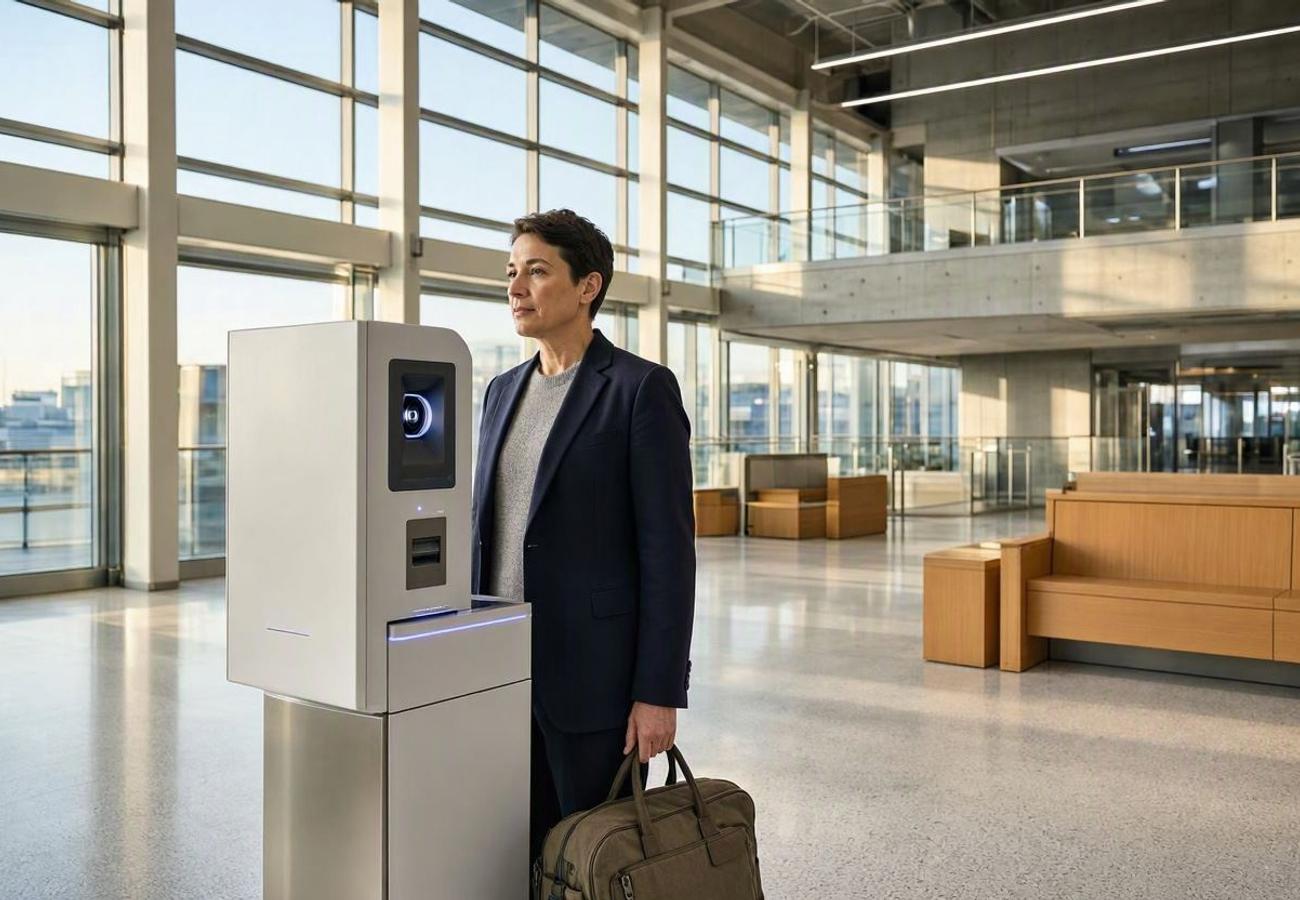
Image generated by AI
Wait times at major US aviation hubs have shifted from a matter of luck to a matter of subscription, with biometric verification now reducing identity checks to under 10 seconds at 65 airports. This transition marks a pivot from traditional document verification to a data-driven identity ecosystem. While passenger volumes have hit record highs in 2026, the infrastructure for "trusted travelers" has expanded, creating a tiered experience where the cost of entry ranges from $0 to $219 annually.
The Efficiency Ecosystem in Numbers
The current state of US airport security is defined by a fragmentation of services. Travelers no longer choose a single "fast lane" but rather a combination of government-mandated security clearances and private biometric accelerators.
TSA PreCheck remains the primary domestic baseline. Operating at over 200 airports, it focuses on the physical screening process. The financial barrier to entry is relatively low, with enrollment fees sitting between $76.75 and $85 for a five-year term. The primary data point for PreCheck is predictability; wait times typically remain under 10 minutes, regardless of the peak morning rush.
For those operating on an international scale, Global Entry serves as the high-tier government option. At a cost of $120 for five years, it integrates the benefits of TSA PreCheck while automating the customs process. This is a strategic move by U.S. Customs and Border Protection (CBP) to modernize border crossings and move toward passport-free checkpoints.
The private sector's most aggressive entry is CLEAR Plus. Unlike government programs that focus on the screening or customs phase, CLEAR targets the identity verification phase. At $219 per year, it utilizes iris and fingerprint scans to move members to the front of the security line. The value proposition here is purely temporal: jumping the queue at high-congestion hubs like Los Angeles (LAX) or Atlanta (ATL).
Comparative Analysis: Trusted Traveler ROI
When analyzing the cost-per-year of these programs, a clear pattern emerges. Government programs offer long-term stability (5-year terms), while private services operate on a recurring annual subscription model.
The emergence of the Mobile Passport Control (MPC) app represents a significant shift toward "zero-cost" efficiency. As of May 2026, MPC has expanded to 63 locations. By digitizing customs declarations, it provides a dedicated lane that often rivals the speed of Global Entry kiosks without the $120 fee or the rigorous background check.
| Program | 2026 Cost | Term Length | Primary Benefit | Scope |
|---|---|---|---|---|
| TSA PreCheck | $76.75 - $85 | 5 Years | No shoe/belt removal | Domestic US |
| Global Entry | $120 | 5 Years | Automated Customs + PreCheck | International $\rightarrow$ US |
| NEXUS | $120 | 5 Years | US/Canada Border + PreCheck | North American |
| SENTRI | $120 | 5 Years | US/Mexico Border + PreCheck | North American |
| CLEAR Plus | $219 | 1 Year | Biometric Identity Jump | Selected Hubs |
| MPC App | $0 | N/A | Digital Customs Declaration | 63 Locations |
The harmonization of fees in late 2024 for Global Entry, NEXUS, and SENTRI to a flat $120 suggests a regulatory move toward a unified border-crossing price point. This makes NEXUS particularly high-value for North American residents, as it covers land, air, and marine ports of entry across two nations.
What This Means for Travelers
The data indicates that the "optimal" travel stack depends entirely on your home hub and flight frequency. If you are a domestic-only traveler, the $85 investment in TSA PreCheck provides the highest ROI in terms of stress reduction per dollar. However, for those flying internationally, the $120 Global Entry fee is a logical upgrade because it encompasses PreCheck.
For travelers planning trips in late 2026, the following actionable strategies are recommended:
- The Budget Stack: Download the Mobile Passport Control app. If your destination is one of the 63 supported locations, you can bypass customs lines for free.
- The Power User Stack: Combine CLEAR Plus with Global Entry. This allows you to skip the ID line (CLEAR) and the physical screening line (PreCheck/Global Entry), which is the only way to ensure a sub-10-minute experience at hubs like ATL or ORD.
- The Border Specialist: If you frequently cross into Canada or Mexico, prioritize NEXUS or SENTRI over Global Entry. Since the fees were harmonized to $120, there is no financial penalty for choosing the more specialized regional program.
- The Liquid Strategy: If flying through Atlanta (ATL), Chicago O'Hare (ORD), or Phoenix (PHX), look for the "Liquid 3D" CT-scanner lanes. These 14 airports now allow containers up to nine ounces, removing the traditional 3.4-ounce restriction for PreCheck members.
Projections for Biometric Integration
Based on the current trajectory of International Air Transport Association (IATA) standards and CBP's rollout, we are moving toward a "seamless" terminal. The expansion of Touchless ID to 65 airports is a precursor to a fully biometric journey where the physical passport becomes a backup rather than a primary requirement.
We expect the $219 CLEAR Plus price point to face pressure as government-run biometric options (like the MPC app and expanded Global Entry kiosks) become more sophisticated. The market is shifting from "paying for access" to "providing data for speed." Travelers who maintain updated digital profiles with the CBP will likely see the fastest processing times regardless of their paid memberships.
FAQ: Airport Efficiency 2026
Is CLEAR Plus worth $219 if I already have TSA PreCheck? Yes, but only at congested hubs. PreCheck speeds up the screening (no shoes off), but CLEAR speeds up the identification (skipping the ID line). At airports like LAX, using both is the fastest possible combination.
Does Global Entry still include TSA PreCheck? Yes. The $120 fee for Global Entry covers both the automated international customs kiosks and the domestic TSA PreCheck lanes for the duration of the five-year membership.
How does the free MPC app compare to Global Entry? MPC is a digital declaration tool that grants access to a dedicated lane. While Global Entry is a full membership with a background check, MPC is an app-based shortcut that is often nearly as fast.
Where can I use the 9-ounce liquid rule? This is limited to 14 airports utilizing advanced CT scanners, including major hubs like Atlanta (ATL), Chicago O'Hare (ORD), and Phoenix (PHX).
The era of the airport queue is ending; the era of the digital identity has arrived.
Related Travel Guides
Disclaimer
This article is for informational and educational purposes only. It does not constitute legal, financial, or professional advice. While we strive to provide accurate and up-to-date information, travel policies, regulations, and conditions change rapidly. Always verify information with official sources before making travel decisions. Nomad Lawyer makes no representations about the accuracy, reliability, completeness, or suitability of the information provided. Readers should consult qualified professionals for advice specific to their circumstances. The views expressed in this article are those of the author and do not necessarily reflect the views of Nomad Lawyer.
Preeti Gunjan
Contributor & Community Manager
A passionate traveller and community builder. Preeti helps grow the Nomad Lawyer community, fostering engagement and bringing the reader experience to life.
Learn more about our team →