
624 Flight Delays and 17 Cancellations Cripple Atlanta Hub as Delta, Southwest, Frontier, American, United Face Major Disruptions Across US and International Routes in June 2026
Hartsfield-Jackson Atlanta International Airport ground to a halt on June 19, 2026, with 624 delays and 17 cancellations affecting Delta, Southwest, Frontier, American, and United Airlines across North America, Europe, and Asia-Pacific routes.

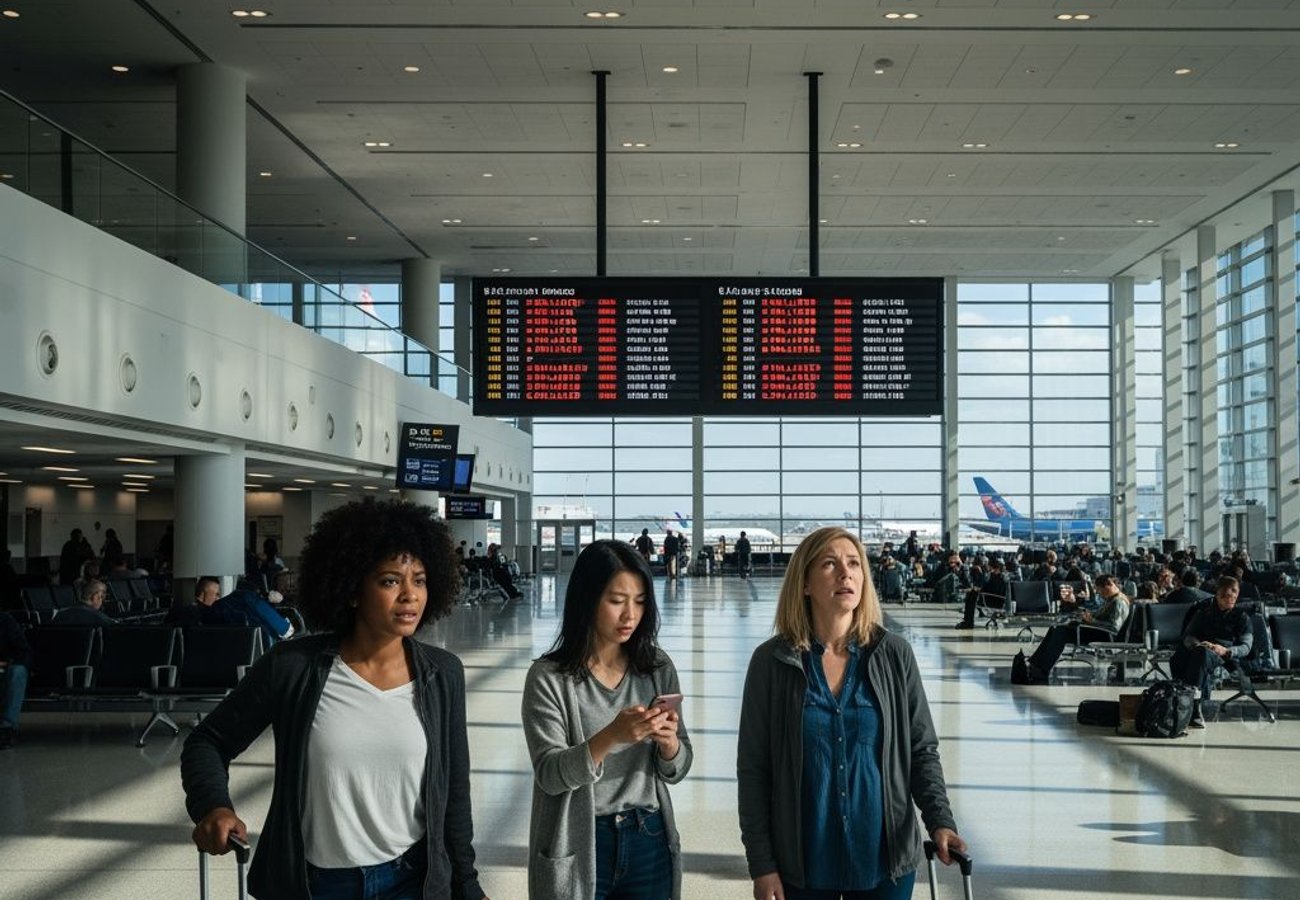
Image generated by AI
The Day Atlanta's Hub Seized Up: 624 Delays in Single Day
June 19, 2026 marked one of the most significant travel disruptions at Hartsfield-Jackson Atlanta International Airport (ATL) this year. The numbers tell a stark story: 624 delayed flights and 17 cancellations rippled across the world's busiest airport by passenger traffic, stranding thousands of travelers and halting connections to over 20 countries.
What began as routine operational challenges cascaded into a network-wide crisis. By midday, the airport's departure boards had transformed into a sea of "DELAYED" tags, with destinations ranging from domestic hubs to European capitals and Asia-Pacific gateways left in limbo.
Delta Takes the Heaviest Hit
Delta Air Lines bore the brunt of the disruption. As the primary hub carrier at Atlanta, Delta's operation acts as the nervous system for thousands of daily connections. When disruptions strike here, they don't stay local—they metastasize.
Delta recorded the single largest share of delays and cancellations, according to real-time tracking data from FlightAware. The carrier's regional partner, Endeavor Air, which operates feeder flights into the hub, also experienced significant cascading delays.
Reddit: "Waited 6 hours at ATL today. Delta's app was useless, ground crew seemed confused. Never again without travel insurance." — r/travel
The domino effect was immediate. Aircraft rotations fell out of sequence. Crews exceeded duty limits. International connections—flights bound for London, Frankfurt, Seoul, and Buenos Aires—began piling up on the tarmac.
When One Hub Breaks, the Network Breaks
This wasn't an isolated incident. Southwest Airlines, Frontier Airlines, American Airlines, and United Airlines all reported significant delays through Atlanta. Even carriers without major hubs at ATL—British Airways, Air Canada, JetBlue, Lufthansa, and Alaska Airlines—felt the shockwave.
The disruption extended far beyond Georgia's borders. Secondary hubs experienced spillover effects: Boston Logan International, Philadelphia International, Reagan National, Chicago O'Hare, LaGuardia, and Newark Liberty all reported elevated delay rates.
International routes connected to Toronto, Mexico City, Rome, Berlin, Seoul, Bogotá, Buenos Aires, Santo Domingo, Guatemala City, and Caribbean island destinations experienced schedule adjustments as aircraft and crews fell behind.
The Real Cost: 624 Individual Stories
Behind every delayed flight sits a human story. Business travelers missed board meetings. Families arrived hours late to reunions. Connecting passengers missed tight windows in secondary hubs. International arrivals faced cascading delays that ate into hotel reservations and tour itineraries.
The 17 cancellations hit hardest—those passengers faced rebooking decisions with limited options on a crowded travel day, often settling for flights a day later or accepting significant route deviations.
Why Atlanta? Why Today?
Hartsfield-Jackson Atlanta International Airport has held the "world's busiest airport" designation by passenger traffic for over two decades. That volume creates razor-thin operational margins. Aircraft rotations must sync precisely. Ground crews work at maximum capacity. Air traffic control sequences departures in tight windows.
According to aviation operations experts, even minor disruptions at Atlanta can cascade across hundreds of flights. When delays begin compounding—whether from maintenance issues, staffing shortages, air traffic management constraints, or weather—the system lacks buffer capacity to absorb the shock.
What Travelers Should Do (And What's Often Too Late)
By the time passengers discover their flights are delayed, critical decisions have already passed them by. But here's what matters:
Real-time monitoring is essential. Check your airline's app and FlightAware simultaneously—they don't always sync. Email notifications arrive too late. Gate assignments change frequently. Arrive 2-3 hours early for domestic flights, 3-4 for international, during known disruption periods.
Flexibility is survival. If your flight is cancelled, multiple airlines offer rebooking—but seats fill fast. Consider accepting longer routing, connections through secondary cities, or flights departing 6-12 hours later. Something is better than stuck.
Keep essentials accessible. Medications, chargers, identification documents, and travel confirmations should remain in your carry-on—not buried in luggage you can't access. Disruptions are unpredictable. Your access to necessities shouldn't be.
For international travelers, extended delays create cascading problems: hotel reservations expire, ground transportation arrangements fall apart, onward connections vanish. Communicate with hotels and ground providers immediately when delays exceed 4 hours.
Understanding What Caused This
Airlines and airports cite "routine operational challenges" with deliberate vagueness. The reality: aircraft rotations require precise choreography, crews must rest between shifts, maintenance procedures cannot be rushed, and air traffic control manages capacity constraints constantly.
At a hub like Atlanta, even a 30-minute delay to a major aircraft (often a widebody serving international routes) can trigger cascade failures. The plane can't rotate to its next scheduled flight. The crew times out. The subsequent flight gets cancelled. Passengers booked on that cancellation rebook to the next available flight—which becomes overbooked.
It's not malice. It's system fragility.
The Domino Effect in Real Time
What made June 19, 2026 particularly damaging wasn't a single catastrophic event—it was the lack of surge capacity. With Delta, Southwest, American, United, Frontier, Endeavor Air, British Airways, Air Canada, Lufthansa, and other carriers all operating near-maximum density through Atlanta, no carrier had slack to absorb disruptions.
One aircraft breakdown. One crew duty-time issue. One air traffic management slowdown. Any single problem became a network emergency.
How to Monitor Live Disruptions
FlightAware remains the gold standard for real-time delay tracking. Airline apps provide official rebooking options but lag behind actual conditions. Airport websites display general delay information but lack granularity.
The strategy: Monitor FlightAware for trend identification, cross-reference with your airline's app for official policy, and check airport boards (if you're onsite) for real-time gate assignments.
Looking Forward: Are Hub Systems Resilient Enough?
The June 19, 2026 Atlanta disruption raises uncomfortable questions about aviation's hub-and-spoke network architecture. When the world's busiest airport experiences a bad day, global connectivity suffers immediate consequences.
Airlines have hedged this risk by expanding secondary routes and offering point-to-point service on profitable city pairs. But consolidation means fewer carriers control more capacity—and when a major hub stutters, alternatives disappear quickly.
For travelers, the practical lesson remains unchanged: expect disruptions, build flexibility into plans, stay informed through multiple channels, and maintain access to critical resources during delays.
Airports don't fail—they just occasionally remind us how tightly woven the aviation network really is.
Related Travel Guides
Disclaimer
This article is for informational and educational purposes only. It does not constitute legal, financial, or professional advice. While we strive to provide accurate and up-to-date information, travel policies, regulations, and conditions change rapidly. Always verify information with official sources before making travel decisions. Nomad Lawyer makes no representations about the accuracy, reliability, completeness, or suitability of the information provided. Readers should consult qualified professionals for advice specific to their circumstances. The views expressed in this article are those of the author and do not necessarily reflect the views of Nomad Lawyer.
Kunal K Choudhary
Co-Founder & Contributor
A passionate traveller and tech enthusiast. Kunal contributes to the vision and growth of Nomad Lawyer, bringing fresh perspectives and driving the community forward.
Learn more about our team →