
The Hidden Luxury: Five Insider Secrets About First-Class Cabin Suites Airlines Won't Tell You
Breaking airline news and aviation industry updates for 2026.

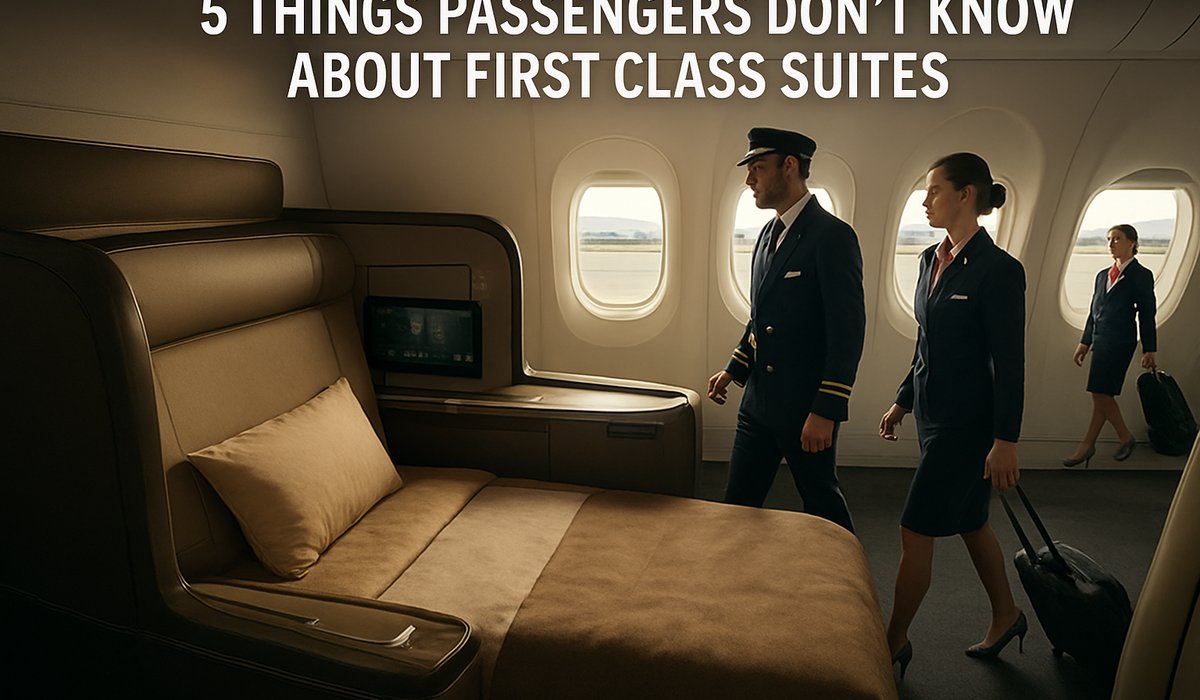
Image generated by AI
The Hidden Luxury: Five Insider Secrets About First-Class Cabin Suites Airlines Won't Tell You
As premium air travel becomes increasingly exclusive, we reveal what separates ultra-luxury first-class cabins from the rest—and why the real value lies beyond the seat itself
The Declining Landscape of True First Class
International first-class travel has become a vanishing luxury in commercial aviation. With a dwindling number of carriers offering this tier of service, those privileged few who access these ultra-premium cabins experience a fundamentally different travel proposition than even business-class passengers—but not always in ways the industry openly advertises.
The distinction between first-class and business-class travel extends far beyond leather seats and extra legroom. While contemporary cabin design dominates marketing narratives, industry insiders recognize that the true dividing line rests on what aviation professionals call the "soft product"—the intangible elements that transform a flight into an experience.
Hard Product vs. Soft Product: Where the Real Gap Emerges
When evaluating premium cabin offerings, the aviation industry categorizes amenities into two distinct categories. The "hard product" encompasses tangible physical features: seat width, recline angles, direct-aisle access, and screen dimensions. These elements form the foundation of first-class appeal and dominate airline marketing campaigns.
However, the "soft product"—service standards, culinary offerings, amenity selections, and personalized attention—creates the experiential chasm that justifies first-class premium pricing. This is where carriers differentiate themselves most significantly from business-class competitors, yet it remains largely invisible in booking systems and promotional materials.
Beyond the Seat: Service Standards and Personalization
First-class suites operate under fundamentally different service protocols than their business-class counterparts. Cabin crew-to-passenger ratios, pre-flight preference documentation, and individualized attention create an almost bespoke travel experience. Airlines maintain detailed passenger preference databases—from pillow firmness to beverage selections—that inform each subsequent journey.
Culinary Excellence and Exclusive Amenities
The gastronomic experience distinguishes first-class cabins from all other travel tiers. Rather than standard airline catering, many carriers employ Michelin-starred chefs to design rotating menus, source premium ingredients, and execute multi-course service. Amenity kits transition from functional to luxury-brand collaborations, featuring items unavailable through retail channels.
The Future of Ultra-Premium Travel
As fuel costs, labor expenses, and operational pressures squeeze airline margins, first-class cabins face existential pressures. The combination of flat-bed business seats and enhanced soft products increasingly positions premium economy and business class as viable alternatives for cost-conscious travelers—fundamentally threatening first-class viability.
Frequently Asked Questions
What's the difference between first-class hard product and soft product? Hard product refers to physical cabin elements like seats and screens, while soft product encompasses service quality, meals, amenities, and personalized attention—the latter being where first-class truly justifies premium pricing.
Why are fewer airlines offering international first class? Rising operational costs, jet fuel price volatility, and lower passenger demand relative to business-class capacity have made first-class economically challenging for carriers.
How do first-class service standards differ from business class? First-class maintains lower passenger-to-crew ratios, personalized preference documentation, exclusive culinary offerings, and white-glove service protocols unavailable in business-class cabins.
What amenities make first-class unique? Luxury brand amenity kits, Michelin-caliber dining, premium beverage selections, and bespoke personalization distinguish first-class from competing premium tiers.
Is first-class worth the premium cost? That depends on individual priorities—the soft product experience justifies costs for some travelers, while others find business-class offerings provide comparable value at lower fares.
Related Travel Guides
Flight Delay Compensation Guide 2026
Understanding Airline Route Changes
Airport Security Process Updated (2026)
External Resources
Disclaimer
This article is for informational and educational purposes only. It does not constitute legal, financial, or professional advice. While we strive to provide accurate and up-to-date information, travel policies, regulations, and conditions change rapidly. Always verify information with official sources before making travel decisions. Nomad Lawyer makes no representations about the accuracy, reliability, completeness, or suitability of the information provided. Readers should consult qualified professionals for advice specific to their circumstances. The views expressed in this article are those of the author and do not necessarily reflect the views of Nomad Lawyer.
Raushan Kumar
Founder & Lead Developer
Full-stack developer with 11+ years of experience and a passionate traveller. Raushan built Nomad Lawyer from the ground up with a vision to create the best travel and law experience on the web.
Learn more about our team →