
The Hidden World of Premium Aviation: Five Operational Secrets That Separate Business Class from Economy
Breaking airline news and aviation industry updates for 2026.

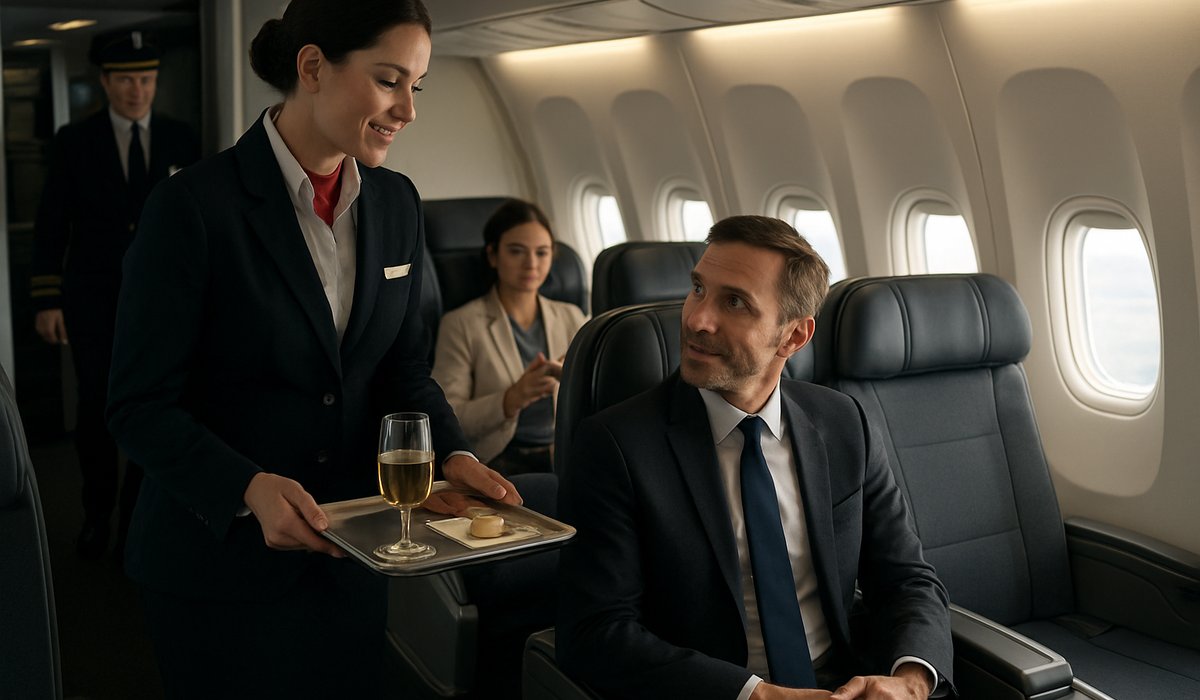
Image generated by AI
The Hidden World of Premium Aviation: Five Operational Secrets That Separate Business Class from Economy
Inside the sophisticated logistics, terminal infrastructure, and passenger workflows that create vastly different travel experiences on identical aircraft
A Tale of Two Airlines Operating Within One Aircraft
Walk through any international airport and you'll witness what aviation experts call "parallel processing"—a dual-system operational framework that transforms a single aircraft into two entirely separate travel experiences. While passengers in economy navigate standard corridors and queuing systems, business class travelers move through invisible channels designed to eliminate friction at every touchpoint.
The distinction extends far beyond ergonomic differences. Modern premium aviation represents a complex marriage of operational engineering and specialized infrastructure that rarely makes headlines, yet generates substantial revenue streams for carriers facing margin pressures from volatile jet fuel prices and competitive airline fees structures.
The Terminal Architecture Divide
Premium passengers access dedicated terminal facilities designed with journey-mapping precision. Separate check-in zones, priority security lanes, and exclusive lounge networks create what industry analysts call "frictionless processing pathways." These aren't merely cosmetic upgrades—they represent significant capital investments in infrastructure that reduce operational bottlenecks and passenger handling times.
Economy passengers, meanwhile, funnel through standardized processing channels designed for throughput efficiency. The architectural separation reflects fundamentally different service models and revenue optimization strategies.
Pre-Departure Workflows and Hidden Protocols
Behind the scenes, business class passengers trigger specialized ground-handling procedures. Priority boarding sequences, dedicated baggage handling protocols, and advance catering preparations represent orchestrated workflows invisible to standard-class travelers. These operational procedures require additional staffing coordination and resource allocation—factors that justify premium pricing in an industry increasingly reliant on ancillary revenue streams, including baggage charges and seat selection fees.
Ground crews employ distinct checklists and timing sequences for premium cabins, reflecting the higher service expectations embedded within business class commercial agreements.
The Digital Experience Differentiation
While seat width and entertainment screen dimensions remain obvious distinctions, business class passengers access integrated digital ecosystems. Dedicated mobile applications, priority seat selection algorithms, and real-time service coordination systems create seamless connectivity. Economy passengers access standardized digital platforms with broader user bases and longer response times.
Cabin Service Ecosystems
The final distinction manifests in specialized catering workflows, personalized beverage programs, and pre-loaded meal preferences—all coordinated through proprietary airline systems. These personalization layers require data infrastructure investment that fundamentally separates premium from standard service delivery models.
FAQ: Premium Aviation Operations and Travel Costs
Q: How do airline fees and baggage charges differ between business and economy? Business class typically includes premium baggage allowances within base fares, while economy passengers face ancillary charges that contribute significantly to airlines' non-fuel revenue.
Q: What operational costs drive premium cabin pricing? Dedicated terminal infrastructure, specialized staffing, customized catering, and reduced seat density directly increase operational expenses that premium fares offset.
Q: How do jet fuel prices impact premium versus economy pricing? Fuel surcharges affect all cabins, but premium passengers often absorb higher percentage increases due to fuel-indexed pricing models.
Q: Why maintain separate passenger processing systems? Operational differentiation allows airlines to optimize resource allocation, manage capacity constraints, and maximize revenue per available seat mile.
Q: Does premium cabin investment justify higher airline profitability? Premium cabins generate 20-40% of revenues on international routes despite occupying 10-15% of seating capacity.
Related Travel Guides
Flight Delay Compensation Guide 2026
Understanding Airline Route Changes
Airport Security Process Updated (2026)
External Resources
Disclaimer
This article is for informational and educational purposes only. It does not constitute legal, financial, or professional advice. While we strive to provide accurate and up-to-date information, travel policies, regulations, and conditions change rapidly. Always verify information with official sources before making travel decisions. Nomad Lawyer makes no representations about the accuracy, reliability, completeness, or suitability of the information provided. Readers should consult qualified professionals for advice specific to their circumstances. The views expressed in this article are those of the author and do not necessarily reflect the views of Nomad Lawyer.
Kunal K Choudhary
Co-Founder & Contributor
A passionate traveller and tech enthusiast. Kunal contributes to the vision and growth of Nomad Lawyer, bringing fresh perspectives and driving the community forward.
Learn more about our team →