
Emirates A380 Wake Turbulence Injures Five on Eurowings Flight Despite Adequate Aircraft Separation
Breaking airline news and aviation industry updates for 2026.

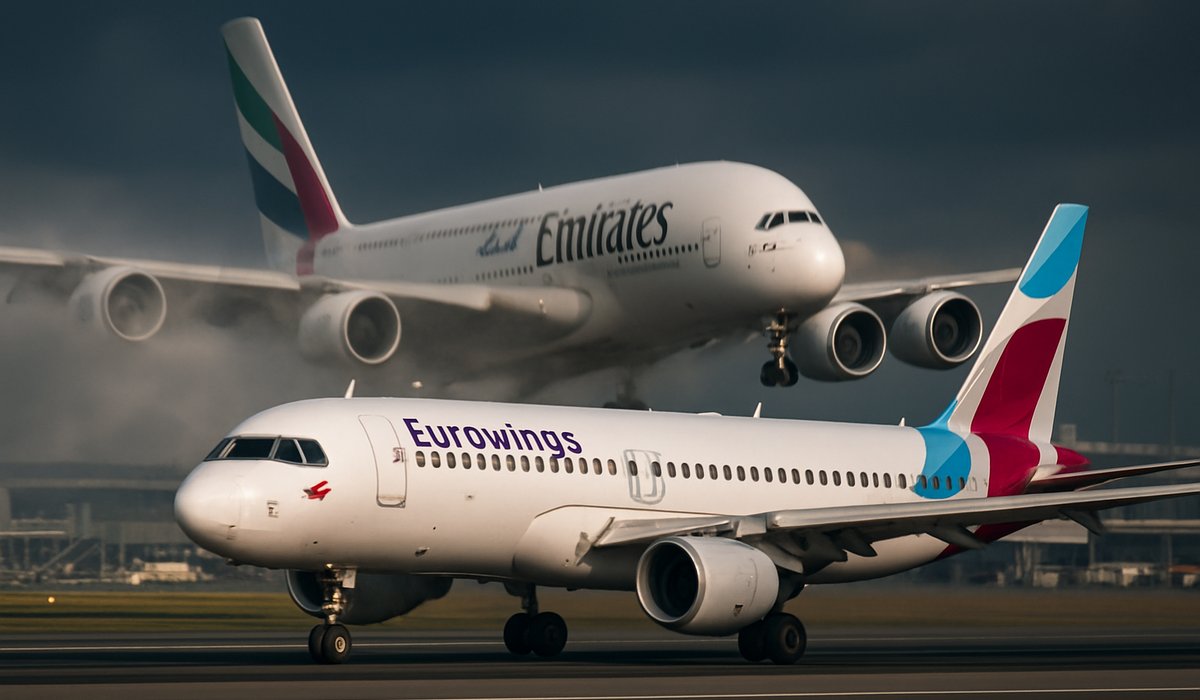
Image generated by AI
Emirates A380 Wake Turbulence Injures Five on Eurowings Flight Despite Adequate Aircraft Separation
Incident highlights persistent aviation safety challenges as air traffic intensifies across European routes
Unexpected Turbulence Leaves Passengers and Crew Injured
Five people aboard a Eurowings Airbus A320 sustained injuries after encountering severe wake turbulence generated by an Emirates Boeing 787 superjumbo during a flight from Greece to Germany. The encounter occurred despite aircraft maintaining what aviation authorities consider safe separation distances, raising fresh questions about the unpredictable nature of wake vortex phenomena in busy European airspace.
The injured included four passengers and one flight attendant, who were thrown violently against the aircraft ceiling during the unexpected turbulent encounter. The incident underscores the inherent challenges pilots face when navigating established flight corridors shared by aircraft of vastly different sizes and weights.
How Wake Turbulence Develops and Spreads
Wake turbulence forms behind large aircraft as their wings generate lift, leaving behind swirling air currents that can persist for several minutes and extend considerable distances—sometimes up to several thousand feet. The Emirates A380, among the world's heaviest passenger aircraft, produces particularly pronounced vortex patterns that smaller aircraft must navigate carefully.
Aviation regulations typically mandate specific distance separations between aircraft based on their classification. However, atmospheric conditions, altitude variations, and wind patterns can cause these invisible hazards to drift unpredictably from their expected trajectories, occasionally affecting aircraft that technically maintain regulatory compliance.
Regulatory Framework Under Scrutiny
The incident occurred despite standard air traffic control procedures designed specifically to prevent such encounters. European aviation authorities implement wake turbulence separation minima that vary depending on aircraft weight categories and runway configurations. Eurowings' A320, a narrowbody jet with significantly lighter mass than the double-deck Emirates A380, falls into a different operational category requiring heightened precautions.
Flight crews receive extensive training in recognizing and responding to wake turbulence encounters, with pilots instructed to maintain heightened vigilance during climb-out phases—precisely when this incident occurred. The fact that injuries resulted despite regulatory safeguards suggests the severity of the encounter exceeded typical turbulence scenarios.
Industry Implications and Safety Response
This incident joins a broader pattern of wake turbulence encounters documented across major European hubs handling dense traffic mixing widebody and narrowbody aircraft. Airlines and air traffic control authorities continuously evaluate separation standards, particularly as aircraft fleets become increasingly diverse in size and weight distribution.
Aviation safety officials have not yet released formal investigative findings, but such incidents typically trigger reviews of separation protocols and atmospheric monitoring capabilities at affected airports.
Frequently Asked Questions
What causes wake turbulence behind large aircraft? Wake turbulence develops from the pressure differential created by aircraft wings generating lift. Larger, heavier aircraft like the A380 produce more pronounced vortex patterns that can remain hazardous for several minutes after the aircraft passes.
How do air traffic controllers prevent wake turbulence incidents? Controllers maintain specific distance separations between aircraft based on weight classifications. These separations increase for lighter aircraft following heavier ones, though unpredictable atmospheric conditions can occasionally allow vortices to affect compliant separation distances.
Are A380 aircraft more dangerous than other jets? The A380 isn't inherently dangerous, but its size and weight generate stronger wake vortices requiring greater caution from following aircraft. Proper separation protocols minimize risk when followed correctly.
Can pilots detect wake turbulence before entering it? Modern weather radar has limited capability to visualize vortex cores, making pilot training and air traffic control coordination essential preventive measures rather than real-time detection systems.
What should passengers do if they experience severe turbulence? Remain seated with seatbelts fastened whenever the seatbelt sign is illuminated, and follow all flight crew safety instructions immediately upon announcement.
Related Travel Guides
Flight Delay Compensation Guide 2026
Understanding Airline Route Changes
Airport Security Process Updated (2026)
External Resources
Disclaimer
This article is for informational and educational purposes only. It does not constitute legal, financial, or professional advice. While we strive to provide accurate and up-to-date information, travel policies, regulations, and conditions change rapidly. Always verify information with official sources before making travel decisions. Nomad Lawyer makes no representations about the accuracy, reliability, completeness, or suitability of the information provided. Readers should consult qualified professionals for advice specific to their circumstances. The views expressed in this article are those of the author and do not necessarily reflect the views of Nomad Lawyer.
Raushan Kumar
Founder & Lead Developer
Full-stack developer with 11+ years of experience and a passionate traveller. Raushan built Nomad Lawyer from the ground up with a vision to create the best travel and law experience on the web.
Learn more about our team →