
Five Airlines Leading Premium Travel in 2026 With Industry-Defining Lie-Flat Business Class Seats
Breaking airline news and aviation industry updates for 2026.

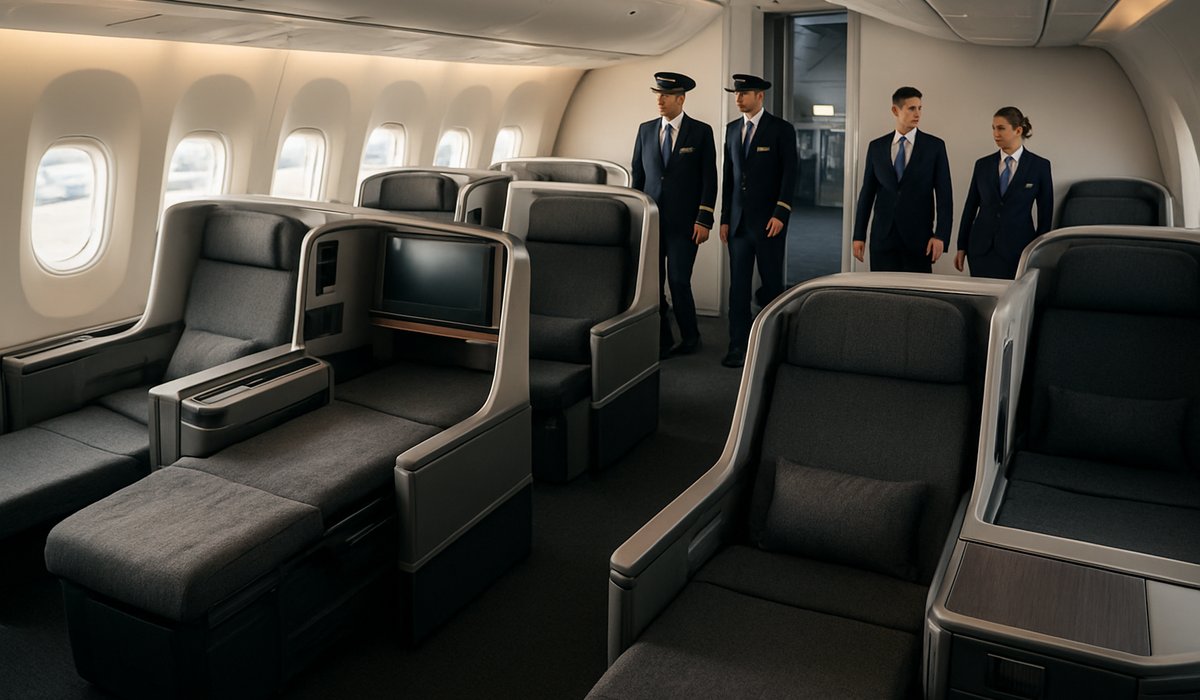
Image generated by AI
Five Airlines Leading Premium Travel in 2026 With Industry-Defining Lie-Flat Business Class Seats
As carriers compete fiercely for high-yield passengers, investment in lie-flat bed technology becomes the decisive factor in premium cabin differentiation
The Premium Seat Arms Race Reshapes Business Travel
The competition for affluent business travelers has intensified dramatically across global carriers, with lie-flat bed technology emerging as the defining battleground in premium cabin design. As we head into 2026, five major airlines are setting new standards with revolutionary seating innovations that fundamentally transform how executives experience long-haul travel.
The shift reflects a broader industry trend: as jet fuel prices stabilize and airlines recover from pandemic-related disruptions, carriers are reinvesting heavily in premium product differentiation. Rather than competing on airline fees and ancillary charges alone, leading operators recognize that business-class passengers—generating 3-5 times the revenue per seat compared to economy—demand transformative in-flight experiences.
Why Lie-Flat Beds Matter to Premium Travel
Modern business class philosophy centers on a single imperative: enabling professionals to arrive at their destination refreshed and ready for immediate work engagement. Unlike traditional reclined seats, true lie-flat beds create genuine sleeping environments, eliminating the productivity loss that haunted previous generations of premium travel.
This capability addresses a critical pain point in business travel economics. When executives can rest effectively during transpacific or transatlantic flights, they arrive with cognitive sharpness intact—directly impacting deal-making ability and decision quality. Airlines quantify this value proposition aggressively to justify premium fares exceeding $10,000-$15,000 for intercontinental routes.
Leading Carriers Invest Heavily in Competitive Advantage
The five airlines pushing boundaries in 2026 share a common strategic vision: premium cabin supremacy through engineering excellence. Each has committed substantial capital to research, development, and cabin retrofitting programs—a significant commitment given current aviation industry pressures around labor costs, fuel expenses, and regulatory compliance.
These investments come amid mixed signals across the broader airline sector. While some carriers have faced criticism for expanding baggage charges and ancillary fees, premium operators maintain that investment in business-class experiences justifies premium pricing structures without proportional increases in hidden fees.
The Broader Industry Implication
This competitive elevation signals confidence in post-pandemic premium travel recovery. Business aviation spending has rebounded strongly, with corporate travel budgets returning to pre-pandemic levels. Airlines betting on lie-flat innovation clearly anticipate sustained demand from multinational corporations, consulting firms, and financial institutions prioritizing executive productivity.
For business travelers evaluating 2026 itineraries, this intensified competition creates genuine advantage—carriers advancing lie-flat bed technology must simultaneously enhance amenities, catering, and service standards to justify premium positioning.
Frequently Asked Questions
What makes lie-flat business class seats different from reclined seats? Lie-flat beds create genuinely horizontal sleeping surfaces, allowing passengers to rest naturally rather than remaining in partial recline positions. This capability enables business travelers to arrive refreshed for immediate work engagement.
How do airline fees factor into business class pricing? Premium cabin passengers typically face fewer baggage restrictions and ancillary charges than economy travelers. Airlines positioning lie-flat technology focus on premium experience justification rather than fee expansion.
Which routes benefit most from lie-flat business class? Long-haul intercontinental flights (8+ hours), particularly transatlantic and transpacific routes, maximize the value proposition of lie-flat beds by enabling extended rest periods.
How does jet fuel pricing impact business class investment? Fuel costs influence overall airline profitability, but premium carriers maintain that high-yield business class revenue justifies cabin retrofitting investments during stable fuel price periods.
What's the typical cost for business class with lie-flat beds? Premium long-haul business class fares typically range $8,000-$15,000+ depending on route, season, and advance booking, with lie-flat amenities justifying the premium positioning.
Related Travel Guides
- American Airlines Flight AAL2986 from Portland to Phoenix Diverts to Las Vegas due to Precautionary Operational Considerations
- Vietnam Airport Poised: Phu Cat's International Expansion Takes Flight June 2026
- Belgium Travel Chaos: Unannounced Air Traffic Control Strike Triggers 470 Flight Cancellations and Delays, Completely Paralyzing Zaventem and Charleroi
Disclaimer
This article is for informational and educational purposes only. It does not constitute legal, financial, or professional advice. While we strive to provide accurate and up-to-date information, travel policies, regulations, and conditions change rapidly. Always verify information with official sources before making travel decisions. Nomad Lawyer makes no representations about the accuracy, reliability, completeness, or suitability of the information provided. Readers should consult qualified professionals for advice specific to their circumstances. The views expressed in this article are those of the author and do not necessarily reflect the views of Nomad Lawyer.
Preeti Gunjan
Contributor & Community Manager
A passionate traveller and community builder. Preeti helps grow the Nomad Lawyer community, fostering engagement and bringing the reader experience to life.
Learn more about our team →