
328 Flights Delayed, 16 Canceled Across Portugal's Major Airports on June 10, 2026
Portugal's aviation network faced major disruptions on June 10, 2026, with 328 flight delays and 16 cancellations across five major airports, affecting TAP Air Portugal, Ryanair, easyJet, and Lufthansa.

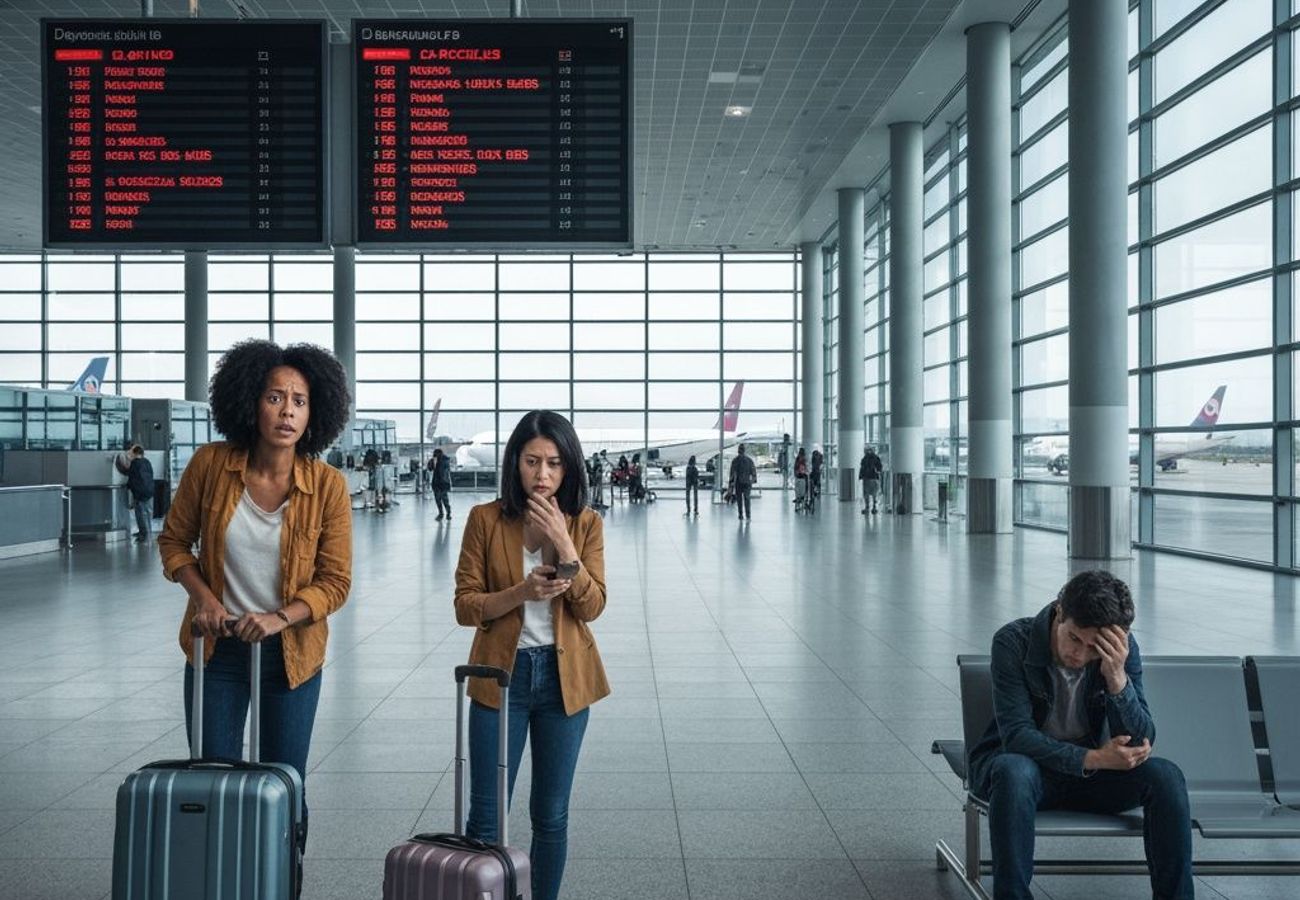
Image generated by AI
Portugal's Aviation Network Grinds to a Halt: What Happened on June 10, 2026
On June 10, 2026, Portugal's five major airports descended into operational chaos. The numbers tell the story: 328 flight delays and 16 cancellations rippled across the national aviation system, stranding thousands of passengers at Humberto Delgado Airport in Lisbon, Porto Airport, Cristiano Ronaldo Madeira International Airport, João Paulo II Airport in Ponta Delgada, and Terceira Airport.
Families heading on summer holidays, business executives rushing to meetings, and international tourists exploring Portugal's coastal charm found themselves trapped in departure halls, watching the dreaded "Delayed" status flicker across flight information boards.
The Disruption Breakdown: Which Airports Were Hit Hardest
The impact wasn't distributed equally across Portugal's network.
Humberto Delgado Airport, Lisbon bore the brunt of the crisis. With 179 delays and 3 cancellations, Lisbon's primary international gateway—which handles millions of annual passengers—accounted for more than half of all nationwide delays. As Portugal's main hub for European, North American, and African routes, any disruption here creates cascading effects across the entire continent.
Porto Airport recorded the second-heaviest hit with 91 delays and 2 cancellations, reflecting strong passenger demand during the peak tourism season in Portugal's northern region.
Cristiano Ronaldo Madeira International Airport in Funchal experienced a notably high cancellation rate relative to its traffic volume: 34 delays paired with 9 cancellations. The island airport operates in a uniquely challenging environment where weather conditions and strong crosswinds frequently affect flight schedules.
João Paulo II Airport in Ponta Delgada, serving the Azores, recorded 23 delays and 2 cancellations, disrupting both domestic and international services connecting the islands to mainland Portugal and beyond.
Terceira Airport weathered the day with minimal damage: just 1 delayed flight and 0 cancellations.
What Caused This Cascade of Delays and Cancellations?
Aviation disruptions rarely stem from a single culprit. Industry experts typically point to a constellation of operational factors:
Air traffic congestion across European airspace remains the most persistent villain. During peak travel seasons, maintaining separation between aircraft becomes an intricate choreography that sometimes fails.
Weather-related operational limitations can ground or delay flights, particularly at island airports like Madeira where atmospheric conditions are unpredictable. Aircraft rotation delays—when a plane scheduled for one flight hasn't returned from a previous leg—create a domino effect throughout an airline's network.
Crew scheduling requirements, ground handling operations, and technical inspections also frequently contribute to delays. When one factor aligns with another, the system breaks down.
Reddit: "Lost my connecting flight in Lisbon due to the cascade. The airline offered rebooking 48 hours later. Worth checking EU261 compensation rules if your delay exceeded 3 hours." — r/travel
Why Portugal's Airports Matter to Europe's Travel Ecosystem
Portugal has emerged as a critical node in Europe's aviation network. The country has witnessed sustained growth in air passenger traffic over recent years, driven by explosive tourism demand and expanded international connectivity.
According to Portugal's National Civil Aviation Authority (ANAC) and airport operator ANA Aeroportos de Portugal, the government continues monitoring operations closely while collaborating with airlines and air traffic management authorities to improve efficiency. Long-term infrastructure improvements—particularly in the Lisbon metropolitan area, where capacity challenges have become an ongoing discussion—remain under active exploration.
Travelers can monitor official updates through ANAC, ANA Aeroportos de Portugal, NAV Portugal (the country's air navigation service provider), and individual airline communication channels.
Your Rights Under European Air Passenger Protection
Here's what often gets overlooked: you may have legal protections. Under Regulation (EC) No. 261/2004, passengers affected by significant delays or cancellations could be entitled to meals, accommodation, alternative transport arrangements, and potentially compensation up to €600, depending on the cause and length of disruption.
However—and this matters—eligibility varies depending on operational circumstances. Extraordinary events beyond an airline's control (extreme weather, air traffic control strikes, security threats) typically exempt carriers from compensation obligations.
Protect yourself by:
- Checking flight status before heading to the airport
- Maintaining direct contact with your airline
- Keeping travel documents and receipts
- Reviewing airline rebooking options immediately
- Understanding your rights under applicable regulations
Don't assume the airline will volunteer this information. You often need to file claims yourself or work with specialized compensation services.
The Tourism Sector's Stake in Airport Performance
Portugal's economy runs on tourism. Lisbon, Porto, Madeira, and the Azores collectively welcome millions of international visitors annually, supporting local businesses, hospitality providers, and regional economies worth billions of euros.
Even temporary operational disruptions influence travel plans. During peak holiday periods when flights operate near full capacity, a single cancellation can scatter dozens of passengers across multiple rebooking options—or worse, onto competitors' networks entirely.
Industry stakeholders are investing heavily in digital technologies, improved passenger management systems, and infrastructure upgrades aimed at reducing congestion. But modernization takes time, and demand keeps accelerating.
Looking Ahead: The Reality of Modern Aviation
Despite the June 10 chaos, Portugal's airport network continues handling substantial passenger volumes and remains a critical gateway to Europe and the Atlantic region.
For travelers, patience and preparation have become increasingly valuable commodities. Before every flight, understand your rights, verify your airline's rebooking policies, and keep copies of everything. Behind every delayed departure board are families eager to reunite, tourists beginning long-awaited vacations, and business travelers working against impossible clocks.
The 328 delays and 16 cancellations created real inconvenience across Portugal's airports on that single day. But authorities, airlines, and airport operators continue working—however incrementally—toward smoother operations to keep one of Europe's most popular travel destinations connected to the world.
Stay informed, know your rights, and always check that flight status before leaving home.
Related Travel Guides
Disclaimer
This article is for informational and educational purposes only. It does not constitute legal, financial, or professional advice. While we strive to provide accurate and up-to-date information, travel policies, regulations, and conditions change rapidly. Always verify information with official sources before making travel decisions. Nomad Lawyer makes no representations about the accuracy, reliability, completeness, or suitability of the information provided. Readers should consult qualified professionals for advice specific to their circumstances. The views expressed in this article are those of the author and do not necessarily reflect the views of Nomad Lawyer.
Preeti Gunjan
Contributor & Community Manager
A passionate traveller and community builder. Preeti helps grow the Nomad Lawyer community, fostering engagement and bringing the reader experience to life.
Learn more about our team →