
Boeing's $2 Billion Composite Wing Investment Dwarfs Entire Airbus A330neo Redesign Budget
Breaking airline news and aviation industry updates for 2026.

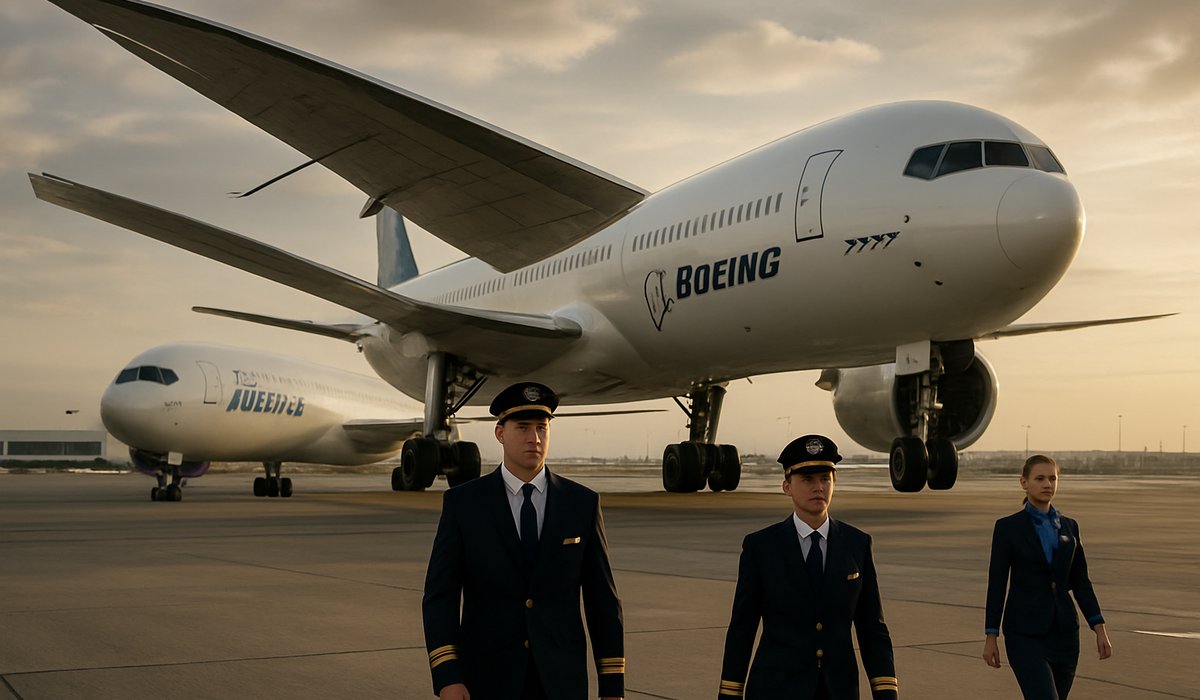
Image generated by AI
Boeing's $2 Billion Composite Wing Investment Dwarfs Entire Airbus A330neo Redesign Budget
Engineering ambition versus pragmatic efficiency: How two aerospace giants chart divergent paths for widebody aircraft modernization
The Billion-Dollar Question: Investment Strategies Diverge
Boeing and Airbus have adopted fundamentally different philosophies in extending the lifecycle of their most profitable widebody aircraft programs, with the American manufacturer committing an estimated $2 billion exclusively to composite wing development for the 777X variant—a single structural component—while its European competitor engineered the complete A330neo overhaul within that same budget ceiling.
This striking disparity in resource allocation reveals contrasting corporate strategies as both manufacturers face intensifying pressure from newer aircraft designs and changing market dynamics. The divergence underscores deeper questions about technological risk, development timelines, and capital efficiency in an industry where billions in investment can determine commercial viability for decades.
The 777X's Composite Revolution
Boeing's substantial investment in the 777X's advanced composite wing architecture represents the aerospace giant's commitment to weight reduction and fuel efficiency gains. The composite construction promises significant operational advantages, including improved aerodynamics and extended range capabilities, positioning the aircraft as a competitive response to evolving airline demands for lower operating costs amid volatile jet fuel prices.
The enhanced wing technology reflects Boeing's strategy of maximizing performance improvements while maintaining the proven fuselage foundation of the original 777 platform—a calculated approach balancing innovation with program risk mitigation.
Airbus's Evolutionary Path: The A330neo
In contrast, Airbus pursued a comprehensive modernization strategy with its A330neo, addressing engines, avionics, cabin systems, and aerodynamic enhancements across the entire aircraft within comparable financial constraints. Rather than concentrating resources on a single breakthrough component, the European manufacturer implemented incremental technological advances throughout the platform.
Both aircraft programs emerged during the same developmental era, though they now compete in an increasingly crowded widebody segment challenged by newer entrants and shifting airline preferences toward fuel-efficient, long-range aircraft.
Market Implications and Industry Trends
The contrasting investment approaches occur as airlines worldwide reassess fleet composition amid elevated operating expenses and environmental pressures. Composite wing technology and modern engine innovations—core to both modernization efforts—have become essential differentiators in securing orders from cost-conscious carriers.
As the aviation industry navigates recovery from previous crises and confronts sustainability mandates, these engineering philosophies will likely shape competitive positioning for years ahead.
FAQ: Boeing 777X vs. Airbus A330neo Development
What is the composite wing technology in the Boeing 777X? Advanced composite construction designed to reduce aircraft weight, improve fuel efficiency, and extend operational range compared to traditional aluminum structures.
Why did Boeing and Airbus take different modernization approaches? Boeing concentrated resources on breakthrough technology (composite wings), while Airbus distributed investments across comprehensive system upgrades—reflecting different risk tolerances and market strategies.
How do development costs impact airline ticket prices? Higher aircraft development expenses are typically recovered through increased purchase prices, which airlines pass to consumers through baggage charges, fuel surcharges, and base fares.
Which widebody strategy is more cost-effective for airlines? This depends on mission requirements; the 777X offers superior efficiency gains, while the A330neo provides balanced improvements across all systems.
How do these aircraft compete against newer widebody designs? Both leverage proven platforms with modern engines and avionics to compete with cleaner-sheet alternatives, particularly from Chinese and emerging manufacturers.
Related Travel Guides
- Air India Faces Aviation Ministry Notice After Three Italians Leave Delhi Without Immigration Clearance
- Japan Airlines Engineering Salaries and the Global Surge in Aviation Maintenance Demand
- Major Disruption at London Heathrow: Hundreds Stranded as Cascading Flight Delays and Cancellations Grip Europe's Busiest Hub
Disclaimer
This article is for informational and educational purposes only. It does not constitute legal, financial, or professional advice. While we strive to provide accurate and up-to-date information, travel policies, regulations, and conditions change rapidly. Always verify information with official sources before making travel decisions. Nomad Lawyer makes no representations about the accuracy, reliability, completeness, or suitability of the information provided. Readers should consult qualified professionals for advice specific to their circumstances. The views expressed in this article are those of the author and do not necessarily reflect the views of Nomad Lawyer.
Raushan Kumar
Founder & Lead Developer
Full-stack developer with 11+ years of experience and a passionate traveller. Raushan built Nomad Lawyer from the ground up with a vision to create the best travel and law experience on the web.
Learn more about our team →