The Little-Known Indiana Town That's Surprisingly Beautiful

Discovery Alert: While most travelers speed past on I-64, a 690-person Indiana town along the Wabash River is quietly earning national recognition. New Harmony hides masterpieces by Philip Johnson and Richard Meier, a recreated 1814 hedge labyrinth, and America's most fascinating utopian history.
"I drove through expecting nothing and ended up staying three days," says Rachel Martinez, 39, a Chicago marketing executive. "This place has soul—real, genuine soul you can't manufacture."
Founded twice by visionary leaders searching for utopia, New Harmony offers authenticity mixed with unexpected sophistication. Here are five reasons this little-known Indiana town is surprisingly beautiful.
1. The Roofless Church – Where Architecture Meets Spirituality
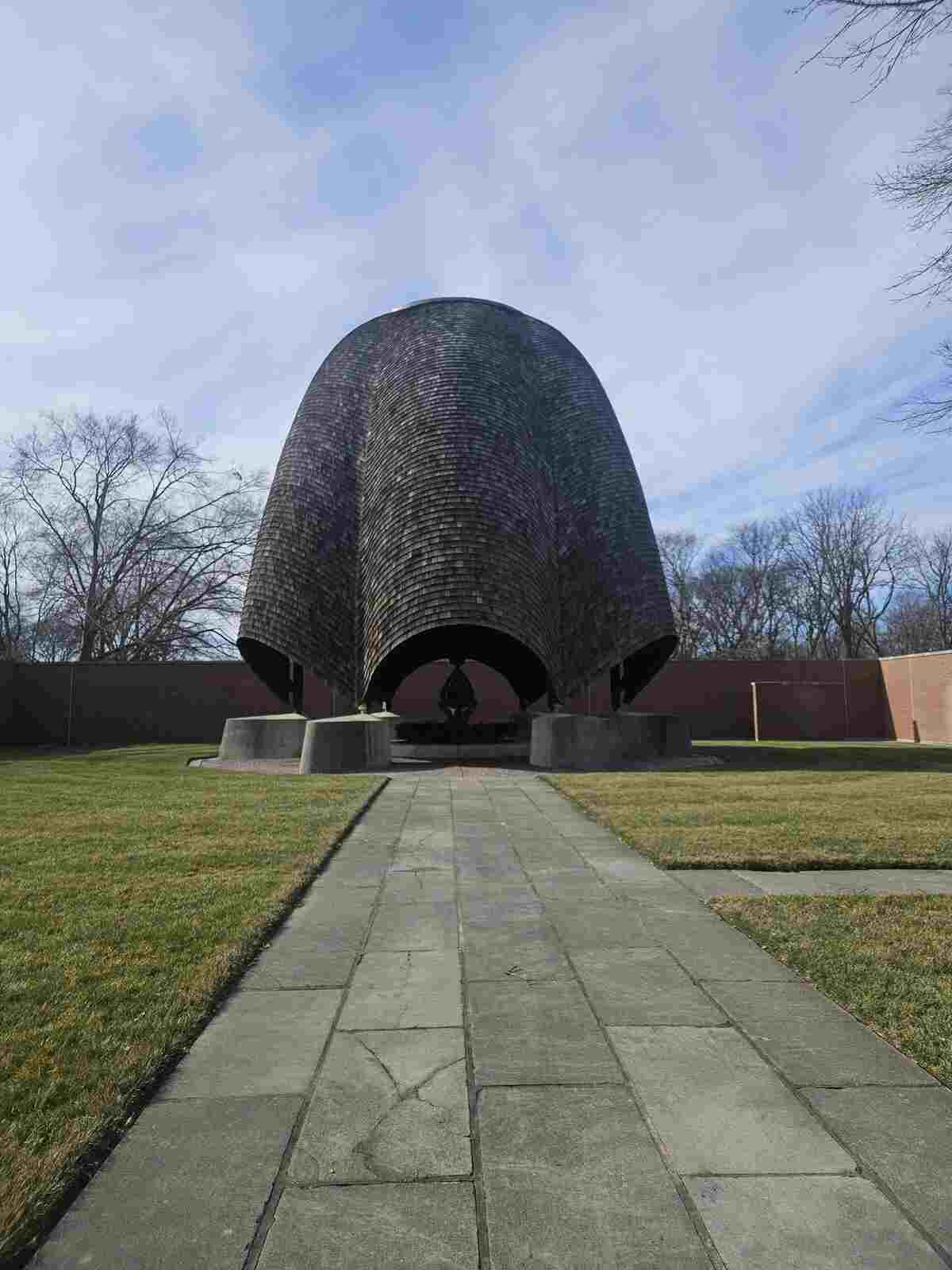
Philip Johnson's 1960 open-air sanctuary rejects every church convention. There are walls, but no roof—just sky. A dome of golden rain tree shingles floats above, while Jacques Lipchitz's bronze sculpture serves as the altar.
I visited on a Tuesday morning when mist hung over the Wabash River. Sunlight filtered through bordering trees, birds called from above, and I understood why Johnson designed it this way. Nature becomes the cathedral.
"People cry here," the docent told me quietly. "Not from sadness. From feeling something they can't explain."
Location: North Street | Admission: Free | Best time: Early morning or golden hour
2. The Atheneum – A Modernist Masterpiece on the Prairie
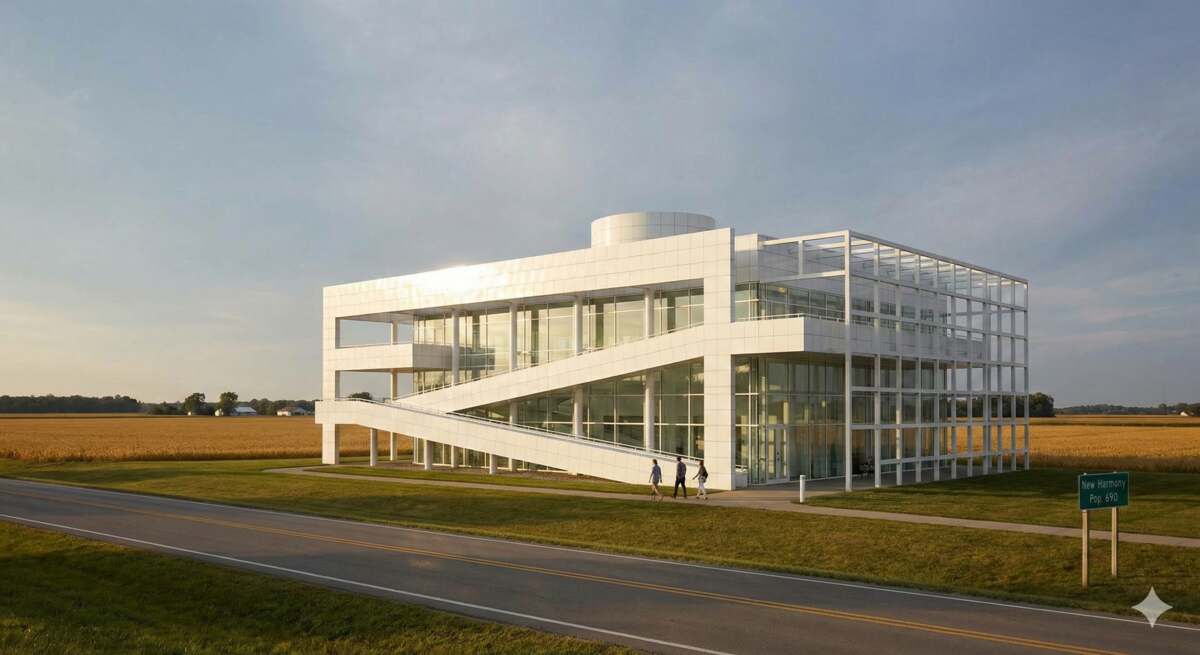
Richard Meier's Atheneum shouldn't exist in a town of 690 people. This Pritzker Prize winner's gleaming white structure looks like it belongs in a major metropolitan art district, not alongside Indiana farmland.
Built in 1979 as the visitor center, it introduces New Harmony's history through exhibits and film. But the building itself is the real story. Meier designed it to align with the town's street grid while deliberately disrupting it—a perfect metaphor for New Harmony's relationship with convention.
"Architecture students come here on pilgrimages," says James Chen, who runs walking tours. "They can't believe Meier built this for a town most people can't find on a map."
Location: 401 North Arthur Street | Admission: Free
3. The Harmonist Labyrinth – A 1814 Path to Contemplation
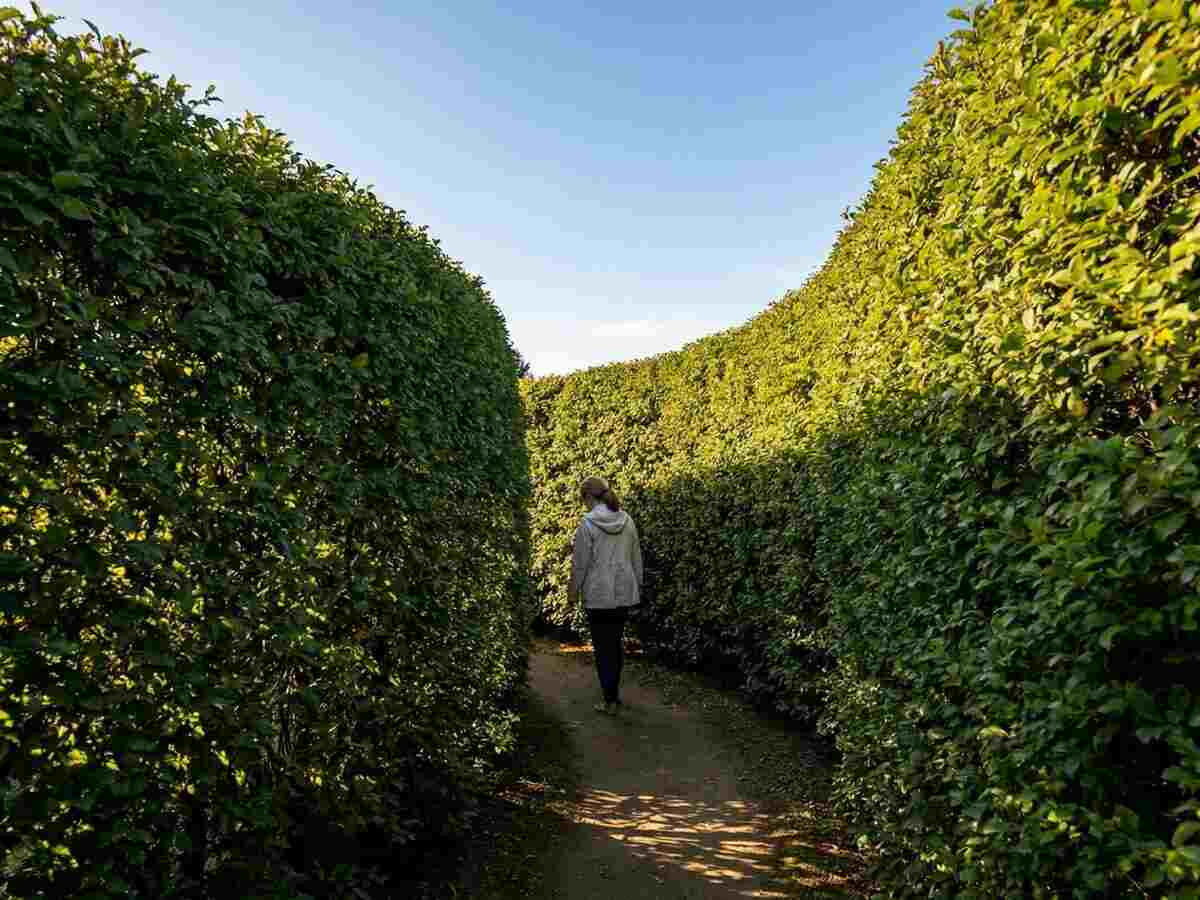
The Harmonist Labyrinth, restored to its 1814 design by German Lutheran Separatists, invites walking meditation. Unlike a maze, a labyrinth has one path—winding, circular, reaching the center. The Harmonists walked it contemplating their spiritual journey.
I walked it on a September afternoon. Hedge walls rose above my head, blocking everything except sky and rustling leaves. Each turn felt deliberate. Time slowed. Twenty minutes passed that felt like both two minutes and an hour.
The nearby Harmonist Grotto offers additional quiet space with benches tucked into gardens—perfect for reading or simply sitting.
Location: Granary Street | Admission: Free | Best time: Weekday mornings
4. Murphy Park and the Wabash River – Natural Beauty Downtown
Murphy Park anchors downtown with mature trees forming a leafy canopy over walking paths and open lawns. Walk to the park's edge, and you reach the Wabash River. The river moves slowly, reflecting clouds and trees. Herons fish along the banks.
Tillich Park sits along the river with massive stones forming a contemplative memorial designed by James Wines. The stones frame river views while creating intimate reflection spaces.
"I come here every morning with coffee," says Margaret Williams, 67, a retired teacher who moved from Indianapolis. "The river reminds me that some things just flow. You can't rush them."
Location: Downtown New Harmony | Cost: Free
5. The Working Men's Institute – Indiana's Oldest Library
The Working Men's Institute, established in 1838, is one of Indiana's oldest continuously operating libraries. Step inside at 407 West Tavern Street, and you discover collections that would make university museums jealous.
David Dale Owen, pioneering geologist, assembled extensive natural history specimens, fossils, and Native American artifacts that remain on display alongside rare books and historical documents.
The building—with original woodwork, creaking floors, and the smell of old books—feels like 1838. Except there's WiFi.
"People think small-town libraries are quaint but limited," says the librarian, pulling out a fossilized mastodon tooth. "This collection rivals much larger institutions. Robert Owen's vision was bringing education to everyone. We're still doing that."
Location: 407 West Tavern Street | Hours: Tuesday-Saturday | Admission: Free
Why New Harmony Matters
New Harmony's beauty isn't accidental. The Harmonists built with craftsmanship. Robert Owen attracted brilliant minds. Later patrons commissioned world-renowned architects who took small-town projects seriously.
The result is a place where history, architecture, nature, and community combine into something rare. No traffic lights. No chain restaurants. Just authentic beauty that makes you slow down.
Getting There: Highway 66 in southwestern Indiana, 15 miles north of Mount Vernon. From Indianapolis (2.5 hours), Louisville (2 hours), or St. Louis (3 hours).
When to Visit: Spring and fall offer ideal weather. Summer brings festivals. Winter provides peaceful solitude.
Where to Stay: New Harmony Inn (506 North Street) or several bed-and-breakfasts.
Local Tip: Start at the Atheneum for orientation, then wander. New Harmony rewards aimless exploration.
The Unexpected Gift
Sometimes the best travel discoveries come from places you didn't know existed. New Harmony proves that beauty and culture don't require crowds or commerce. They require vision and authenticity.
This 690-person Indiana town offers something increasingly rare—a place where you can breathe deeply and remember what peace feels like. That's not just surprisingly beautiful. That's essential.
Related Small Town & Hidden Gem Guides
5 Oregon Cities That Hide Unexpected Charm Around Every Corner
5 Charming Pacific Northwest Towns Where You Could Live on Nothing but Social Security
7 Hidden California Beaches Locals Don't Want You to Find
Disclaimer: Travel information reflects January 2026 conditions. Attractions, hours, and accessibility may change. Verify current status before visiting. This provides general travel information, not professional travel advice. Respect local communities and historic sites.
You Might Also Like

Indiana's Sustainable Travel Revolution: How Bloomington, Indianapolis, and 5 Cities Are Redefining Eco-Tourism in the U.S.

9 Best Beach Towns in Texas, According to Locals, Reddit, Quora and Pinterest in 2026

The 8 Best Small Towns in Texas, According To Reddit, Quora and Pinterest in 2026
